
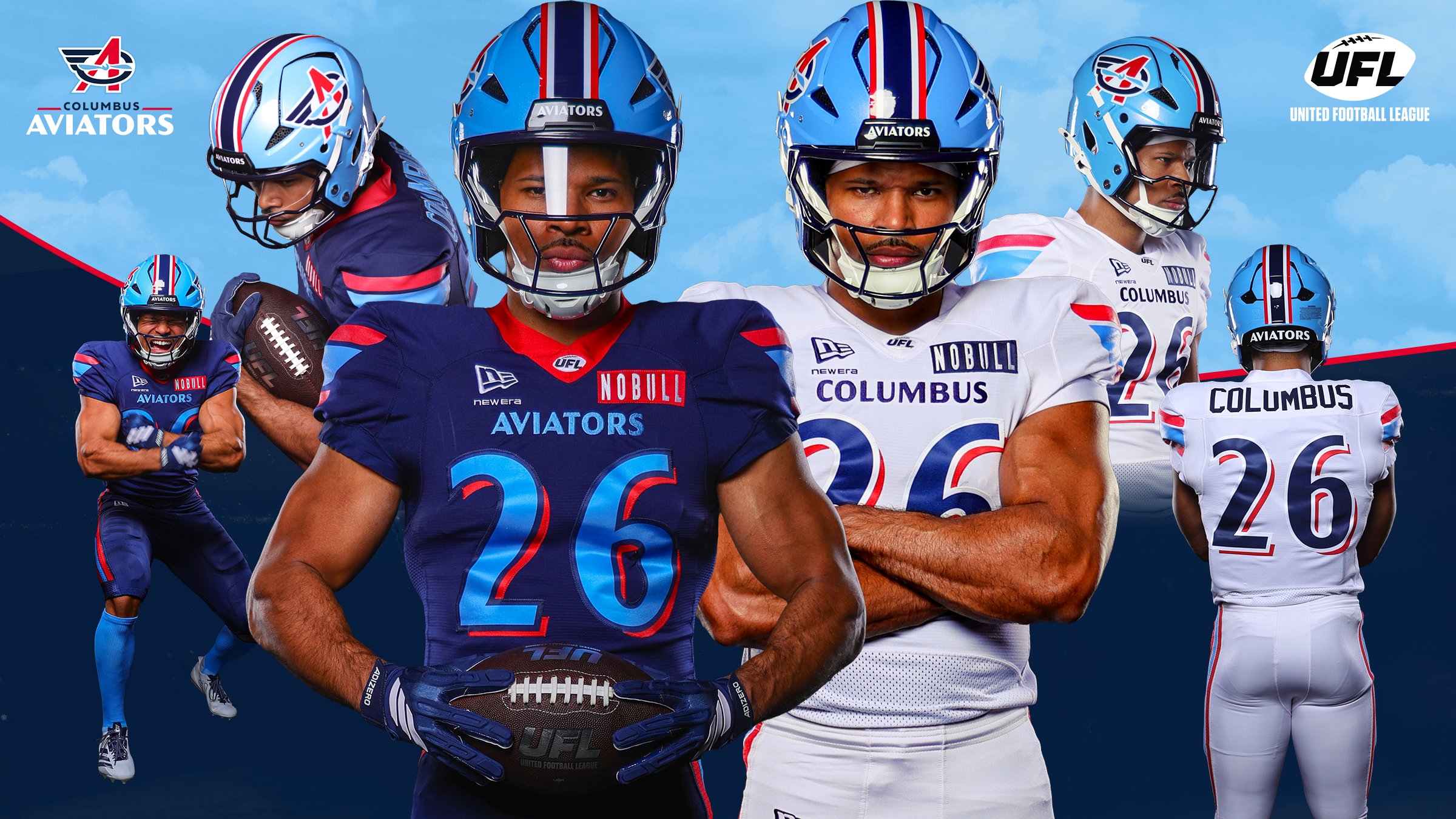
The 2026 UFL season represents one of the most dramatic structural resets in modern spring football. Instead of slowly evolving, the league has chosen to make aggressive changes — relocating franchises, rebranding teams, and entering entirely new markets. Columbus, Louisville, and Orlando are now central to this strategy, replacing teams from Michigan, Memphis, and San Antonio in an attempt to revive interest and stabilize the league.
In this new landscape, the UFL is no longer just experimenting with rules — it is experimenting with geography, identity, and fan engagement. Observers are watching closely, trying to understand whether these changes can actually fix deeper issues. Many follow the evolution of the league through platforms like(Farsi: سایت شرط بندی فوتبال), comparing attendance trends, team performance, and market reactions in real time. The core question remains: are new teams enough to solve old problems?
Why the UFL moved teams in the first place
The decision to relocate teams was not random. It was driven by clear structural issues that the league could no longer ignore.
Attendance had been inconsistent, and in some markets, visibly weak. Large stadiums with small crowds created a poor visual product, while declining TV ratings suggested that interest was not growing fast enough.
The league’s leadership identified two key factors: market fit and stadium environment. Smaller, soccer-specific venues in cities like Columbus, Louisville, and Orlando were seen as a way to create a more energetic and visually appealing experience.
From a business perspective, this made sense. A full 20,000-seat stadium looks far better than a half-empty 60,000-seat venue. But the deeper question is whether changing locations actually solves
Columbus Aviators: opportunity in a crowded sports market
Columbus is an interesting choice. It is already home to established sports teams, including MLS and NHL franchises, which means the city has a proven sports culture.
The Columbus Aviators represent a fresh start, with a new identity, a recognizable football market, and a stadium that fits the league’s scale.
However, this also creates competition.
In a crowded sports market, attention is not guaranteed. The UFL must compete not just with other football leagues, but with established local teams that already have loyal fan bases.
Early results show the challenge. The Aviators opened their season with a loss and are still trying to establish both performance and identity.
Columbus offers potential — but not certainty.
Louisville Kings: a market built for football
Louisville presents a different kind of opportunity. Unlike Columbus, it does not have an NFL team, which means the UFL can position itself as the primary football product in the region.
The Louisville Kings have already shown promising signs, including strong initial ticket demand and growing local support.
This is exactly what the UFL hoped to achieve — entering markets where football interest exists but is not already saturated.
However, enthusiasm at launch does not guarantee long-term success.
Sustaining fan interest requires consistent performance, recognizable players, and a sense of identity. Without those elements, even strong initial momentum can fade.
Louisville may have the best chance among the three new teams — but it still faces the same structural challenges.
Orlando Storm: a familiar but uncertain market
Orlando is perhaps the most complex of the three markets. The city has experience with spring football, but that history is mixed.
Previous teams have struggled to maintain long-term engagement, and the Orlando Storm must overcome that legacy.
At the same time, the team has already shown competitive potential, starting its inaugural season with a win over Columbus.
This suggests that performance on the field could play a key role in building support.
However, Orlando is also a highly competitive entertainment market. Sports teams must compete with tourism, events, and other entertainment options.
This makes consistency — both on and off the field — even more important.
The bigger issue: instability beyond location
While the introduction of new teams is significant, it does not address all of the league’s challenges.
The UFL still faces broader issues, including:
unstable rosters due to constant player movement
evolving rules that change how the game is played
inconsistent team identities across seasons
These factors create a sense of instability that goes beyond geography.
Even if
Comparing the new markets
Team | Market Strength | Key Challenge |
Columbus Aviators | Established sports culture | High competition for attention |
Louisville Kings | Strong football demand | Long-term sustainability |
Orlando Storm | Large entertainment market | Inconsistent historical support |
This comparison shows that each market offers opportunity — but also risk.
Can new teams actually fix the league?
The idea behind relocation is simple: put teams in better markets, improve attendance, and create a stronger product.
But this assumes that location is the primary problem.
In reality, the UFL’s challenges are more complex. Attendance, viewership, and engagement are influenced by multiple factors, including:
quality of play
star power
media visibility
consistency across seasons
Relocation addresses only one part of this equation.
The importance of identity
One of the biggest challenges for the UFL is identity.
Unlike the NFL, which has decades of history, the UFL is still defining what it is. Frequent changes — new teams, new rules, new formats — make that process more difficult.
For fans, identity matters.
They need to know what the league represents, what its teams stand for, and why it is worth following. Without that clarity, even strong markets may struggle to maintain engagement.
A strategy built on risk
The decision to relocate teams to Columbus, Louisville, and Orlando is ultimately a high-risk strategy.
If it works, it could stabilize the league, improve attendance, and create a more sustainable model.
If it fails, it could reinforce the perception that the UFL lacks direction.
So far, the results are mixed. There are signs of potential, but also signs that the underlying issues remain unresolved.
A league still searching for answers
The 2026 season feels less like a continuation and more like an experiment.
New teams, new markets, and new strategies all point to a league that is still searching for the right formula.
Columbus, Louisville, and Orlando are not just new teams — they are test cases.
They represent the UFL’s belief that change can drive growth. But they also highlight the reality that change alone is not enough.
Conclusion without a conclusion
So, can these new teams save the UFL?
The answer is not yet clear.
They can improve certain aspects of the league — attendance, atmosphere, and local engagement. But they cannot solve every problem.
The success of the UFL will depend not just on where teams play, but on how the league evolves as a whole.
For now, Columbus, Louisville, and Orlando are part of that evolution.
Whether they become the foundation of the league’s future — or just another chapter in its ongoing experiment — remains to be seen.