
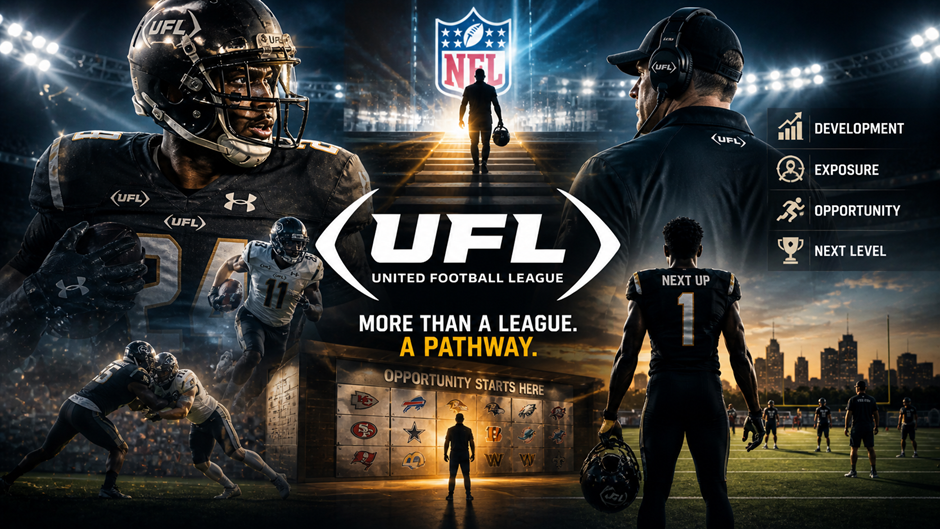
In recent years, the landscape of American football has begun to change in a subtle but important way. While the NFL remains the undisputed pinnacle of the sport, there is growing recognition that the pathway to that level has been incomplete. Thousands of talented players leave college each year without securing a long-term NFL role, not necessarily because of a lack of ability, but because of limited roster spots and opportunity. This gap is exactly where the United Football League (UFL) is beginning to establish its importance.
The emergence of the UFL has introduced a new layer to the football ecosystem — one that bridges the gap between college football and the NFL. For fans who follow player development and career progression, this creates an additional dimension of engagement. Interest in the sport often extends into broader digital platforms and communities, where people track performance trends and emerging talent, sometimes even exploring environments like melbet as part of a wider interaction with competitive sports culture.
A Necessary Bridge Between College and the NFL
One of the most significant reasons the UFL is gaining relevance is its role as a transitional league. The jump from college football to the NFL is one of the most difficult in professional sports. The speed of the game increases, the physical demands intensify, and the tactical complexity becomes far greater.
At the same time, the NFL has strict roster limits, meaning many players who show potential simply do not get enough time or exposure to develop. The UFL provides a structured environment where these players can continue to compete, improve, and remain visible to professional scouts.
According to recent analysis, the league is increasingly viewed as a “bridge between college football and the NFL,” giving players meaningful opportunities to refine their skills and prove themselves in a professional setting.
A Second Chance for Overlooked Talent
Not every talented player enters the NFL through the draft or secures a stable roster position immediately. Many athletes fall into categories such as undrafted prospects, practice squad players, or those released during preseason cuts.
The UFL gives these players a second opportunity. Instead of fading out of the system, they can continue playing at a competitive level, gaining experience and building new game film that reflects their development.
This second chance is not just symbolic — it is practical. Players who perform well in the UFL can attract attention from NFL teams, leading to tryouts, training camp invitations, and even full contracts.
A Professional Environment That Mirrors the NFL
One of the key reasons the UFL is becoming more effective than previous alternative leagues is its structure. Unlike short-lived or loosely organized competitions in the past, the UFL offers a professional environment that closely resembles the NFL in several important ways.
Coaching staff often include individuals with NFL or high-level college experience. Training routines, game preparation, and tactical systems are designed to reflect professional standards. Players are not just competing — they are preparing for the next level.
This exposure is critical because one of the biggest challenges for players transitioning to the NFL is adapting to its complexity. The UFL helps reduce that gap by introducing players to similar systems and expectations before they reach the highest level.
Increased Visibility in a Modern Sports Ecosystem
In today’s sports world, visibility is almost as important as performance. The UFL benefits from modern broadcasting and digital platforms, allowing games to be widely accessible. This exposure ensures that players are constantly being evaluated, not only by fans but also by scouts and analysts.
Every game becomes an opportunity for players to showcase their abilities. Instead of relying solely on college highlights or limited preseason appearances, athletes can demonstrate their skills over a full season.
This visibility accelerates career progression. A strong performance in the UFL can quickly translate into opportunities at the NFL level, creating a more dynamic and responsive talent pipeline.
A Testing Ground for Innovation
Another important aspect of the UFL is its role as a testing ground for innovation. The league has introduced rule changes and gameplay adjustments that encourage a faster, more dynamic style of football. These innovations are not isolated — they often influence broader discussions about the future of the sport.
For example, experimental rules and structural adjustments allow coaches and players to adapt to evolving strategies. This creates an environment where development is not just about individual performance, but also about understanding new ways the game can be played.
Over time, this makes the UFL not just a feeder league, but also a contributor to the evolution of football itself.
Timing: Filling the Football Calendar Gap
The UFL operates during the spring, a period traditionally considered a gap in the football calendar. This timing is strategic. It allows players to remain active after the NFL season ends and before training camps begin.
For players, this means continuous development rather than long periods without competitive football. For NFL teams, it provides an additional window to evaluate talent. For fans, it ensures that football remains a year-round experience.
The league effectively extends the football season, keeping both players and audiences engaged beyond the traditional schedule.
Real Pathways to the NFL
Perhaps the strongest argument for the UFL’s growing importance is the increasing number of players transitioning from the league to the NFL. Each season, multiple athletes secure contracts after proving themselves in the UFL.
This movement demonstrates that the league is not just theoretical in its purpose — it is actively functioning as a development system. NFL teams are beginning to treat it as an extension of their scouting network, using it to identify players who have matured beyond their college performance.
A simple overview of the UFL’s developmental role can be seen below:
Aspect | Role of the UFL | Benefit for Players |
Competitive Play | Full professional season | Continued development |
Exposure | Broadcast and scouting visibility | Increased opportunities |
Coaching | NFL-level systems | Easier transition |
Timing | Spring schedule | Year-round activity |
Career Path | Direct link to NFL | Second chances |
This structure highlights how the league integrates into the broader football system.
The Psychological Advantage for Players
Beyond physical and tactical development, the UFL also provides a psychological advantage. Players gain confidence by competing against professional-level opponents and proving their ability in real game situations.
This confidence is essential when attempting to break into the NFL. Athletes who have already performed under pressure are better prepared for the demands of higher-level competition.
At the same time, the league allows players to rebuild momentum. For those who have faced setbacks, it offers a fresh start in a structured environment.
The Broader Football Ecosystem
The rise of the UFL reflects a broader shift in how football is structured. Instead of a single pathway leading directly to the NFL, there is now a more layered system that allows talent to develop at different stages.
This ecosystem benefits everyone involved. Players gain more opportunities, teams gain access to a deeper talent pool, and fans gain additional content and engagement.
In a connected world where football discussion continues across multiple platforms, communities like to MelBet Facebook Lebanon show how audiences stay engaged with developments across different leagues and levels of the sport.
A League Defining Its Own Importance
The UFL is still in a growth phase, but its role is becoming increasingly clear. It is not trying to compete directly with the NFL, but rather to complement it. By focusing on development, opportunity, and innovation, it is carving out a space that was previously underserved.
As the league continues to evolve, its influence is likely to grow. More players will use it as a stepping stone, more teams will rely on it for scouting, and more fans will recognize its importance within the football landscape.
What makes the UFL particularly interesting is not just what it is today, but what it represents — a shift toward a more connected, flexible, and opportunity-driven model of professional football, where talent is given more than one chance to prove its value.