
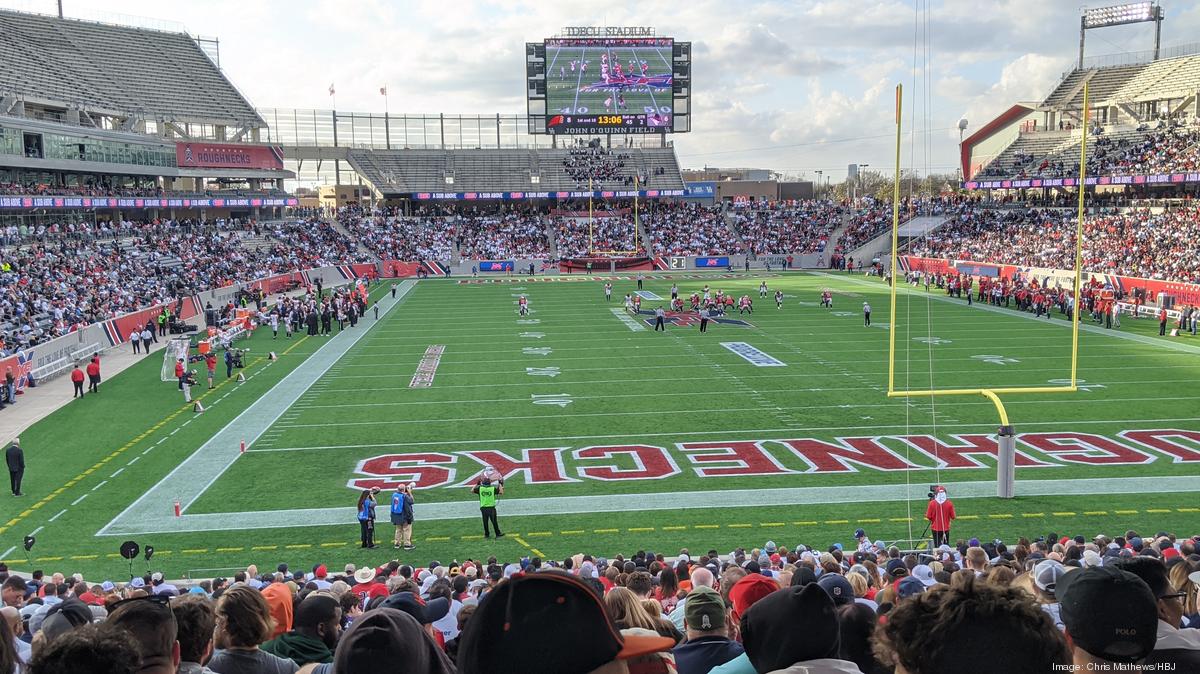
The NFL dominates American sports like nothing else. But from late March to mid-June, the United Football League is carving out a real audience, developing real NFL talent, and doing something no spring football league has managed before: survive long enough to matter.
There is no sensible comparison to be made between the National Football League and the United Football League. The NFL generated an estimated $30 billion in legal wagering handle in the 2025 season alone, drew 89 of the 100 most-watched television programs in America, and commands a media rights ecosystem that makes the entire spring sports calendar look like a rounding error. That is not the argument. The argument is different, and more interesting: in the six-month window between the Super Bowl and the NFL’s August return, a second professional football league is quietly building something real, and the 2026 season is its clearest proof yet.
The United Football League opened its third season on March 27. Eight teams, 43 games across FOX, ABC, ESPN, ESPN2, FS1, and NFL Network, a 10-week regular season running through May, and a championship game on June 13. Through Week 5, league-wide viewership was averaging 631,000 per game, up 3% from the same point in 2025, and the Birmingham at St. Louis matchup in Week 3 crossed a million viewers on ABC. These are not NFL numbers. They are not meant to be. They are the numbers of a league that, unlike every spring football operation before it, is still here.
A New Kind of Football Fan
The audience the UFL is building does not look exactly like the NFL’s. It is younger in some markets, newer to the game in others, and increasingly engaged through platforms the traditional TV audience never touches. The league’s digital presence has grown steadily: in 2024, UFL content on ESPN social channels was up 98% year-on-year from the 2023 XFL season, and the league’s app reached 106,000 active users in its first season.
More relevant for 2026 is what those fans do beyond watching. Spring football sits inside a broader shift in how American sports audiences engage between September and February. The NFL fills that calendar almost completely. Outside it, fans who want football-shaped weekly routines have had nowhere obvious to go. The UFL is changing that. DraftKings, the league’s primary media and betting partner, offers spreads, totals, moneylines, and player props on every game, and the single-table standings format introduced this season has created the kind of consequence-heavy weekly results that give fans a reason to check scores on a Saturday night in April.
The broader shift is visible beyond football. Americans are increasingly managing their sports entertainment, from fantasy to wagering to online gaming, through their phones. That habit does not switch off in the spring. Casinos.com, which covers licensed online casino options for US players, including guides to Apple Pay casinos and other mobile-first deposit methods, has noted consistent engagement from sports fans during spring leagues, when the absence of the NFL creates space for alternative entertainment to fill the void. For the UFL, that behavioral window is not a footnote. It is part of why the league’s audience has been growing rather than contracting.
The NFL’s Unofficial Development League
The clearest measure of the UFL’s legitimacy is not its viewership numbers. It is the names on NFL rosters in September.
Over the past two seasons combined, 66 players with connections to modern spring football have earned NFL regular-season roster spots or practice squad assignments. Brandon Aubrey, the Dallas Cowboys’ kicker and one of the most accurate in the league’s history, came through spring football. Jake Bates hit a 64-yard field goal in the UFL’s inaugural season and earned an NFL contract on the strength of it. Harrison Mevis and Andre Szmyt are both working in the NFL now. The league that once looked like a holding pen for players the NFL had discarded has become a genuine pipeline.
“The UFL continues to serve as the NFL’s most active developmental league,” noted one pre-season assessment of the 2026 rosters. “Over the past two seasons, 66 players with connections to modern spring football have earned spots on NFL regular-season rosters or have been added to practice squads.”
The rule changes tell the same story. The dynamic kickoff format the NFL adopted in 2024 was pioneered in the XFL, the UFL’s predecessor. The one-foot catch rule in use in the UFL mirrors NCAA standards and has surfaced in NFL discussions. The UFL’s 2026 rulebook went further still, banning the tush push play the NFL declined to outlaw after a 22-10 vote fell short of the required 24, and introducing a no-punt rule beyond midfield. According to Sports Business Journal, UFL viewership was up 3% at the midpoint of the 2026 season, with games averaging 631,000 viewers across all broadcast partners. Whether any specific UFL rule makes it into the NFL rulebook is secondary. The point is that the UFL is running experiments the older league is watching closely.
What Mike Repole Changed
The 2026 season looks different from its predecessors in ways that matter. Mike Repole, who joined the league’s ownership group in 2025, arrived with a specific diagnosis: the league was playing in venues too large for its current following, and the empty seats were making games feel like scrimmages rather than events. His solution was blunt. Three markets were dropped, three new ones added. The emphasis shifted to smaller, more intimate venues where a crowd of 10,000 creates atmosphere rather than underlines absence.
Three expansion teams joined the league for 2026: the Columbus Aviators under Ted Ginn Jr., the Louisville Kings under Chris Redman, and the Orlando Storm under Anthony Becht. All three are first-year franchises. All three entered Week 9 in or near playoff contention. The Storm clinched a postseason berth at 6-2, with quarterback Jack Plummer leading the league in passing yards at 1,710 and carrying a 99.8 passer rating with a single interception through eight games. That is not a developmental story. That is a team built to compete, and it is winning.
The Gap That Still Exists
None of this erases the distance between the two leagues. The average UFL player earns a minimum of $6,400 per game under the current collective bargaining agreement. A league-wide MVP bonus is $7,500. The championship game winner earns $5,000 per player. These are not the economics of a rival. They are the economics of a league building sustainable infrastructure from scratch, with an ownership group that has stated a target of 16 teams by 2035 and a 2028 expansion already confirmed in Oklahoma City.
Attendance remains the clearest gap. The league’s internal target for 2026 is between 10,000 and 15,000 fans per game, a range Repole described as the floor for an atmosphere that feels competitive. Some markets are hitting it. Others are not. The Dome at America’s Center in St. Louis, which can fill to 40,000 for a Battlehawks game, remains the outlier that demonstrates what the ceiling looks like when a market fully commits.
What the 2026 season has demonstrated is that the UFL is no longer a feasibility study. It has survived its sophomore slump, rebuilt its market footprint, introduced expansion teams that are competing for titles, and given football fans something real to follow during the months when the NFL goes quiet. With the regular season running through May and the championship game on June 13, the 2026 UFL schedule still has meaningful football left to play. The league is doing the most important thing a sports property can do: making people want to know what happens next.