
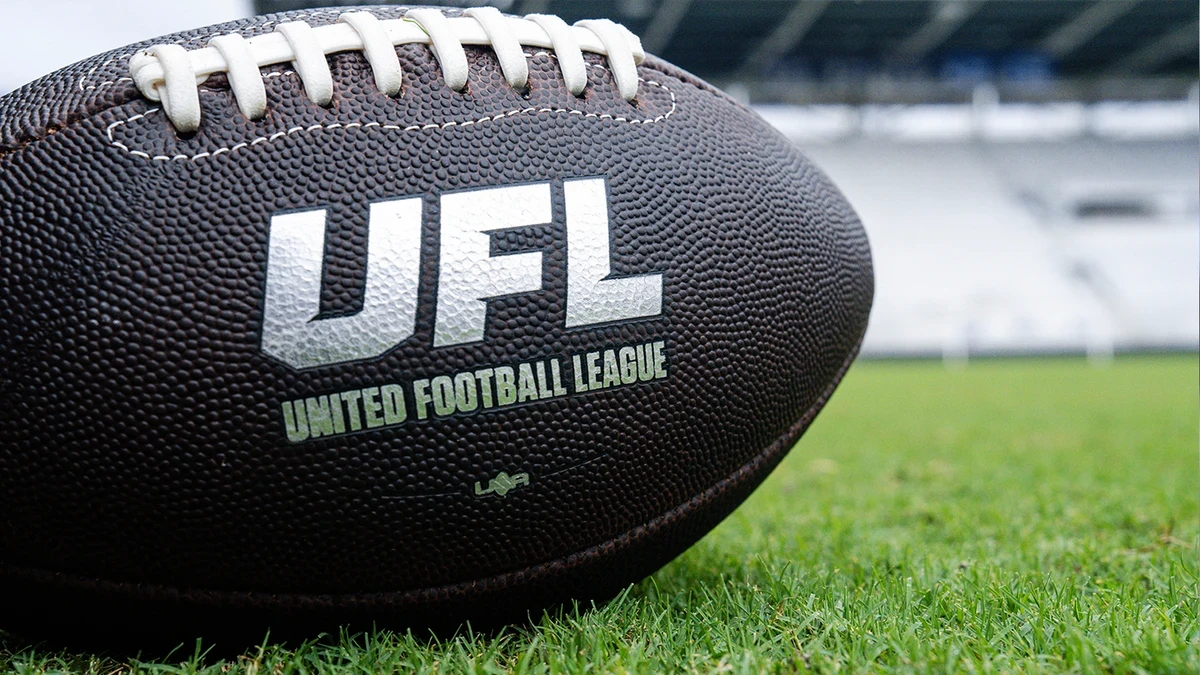
While the NFL tinkers with minor adjustments, the UFL is swinging for the fences with a bold set of rule changes heading into its new season. So what exactly is changing with the UFL rule changes 2026, how do they stack up against the NFL, and could the world's biggest sports league actually take notes?
The NFL's current reform discussions center on expanding the video referee's responsibilities — cautious, incremental stuff. The idea is to give officials slightly more authority over situations that fall outside the direct flow of play. There's no sign of anything truly disruptive on the horizon, and sweeping structural changes like the Dynamic Kickoff introduced two years ago aren't expected to repeat themselves anytime soon.
The UFL is taking a very different path.
Despite operating in the NFL's shadow, the spring league has a genuine appetite for innovation. It may still struggle to shake the "gimmick" label in the eyes of hardcore football fans, but the willingness to experiment is real — and this year's changes are among the most ambitious the league has put forward. Two of them, in particular, directly reshape how kicking factors into the game.
Field Goals Just Got More Valuable
The headline change: field goals from beyond 60 yards are now worth four points.
"Kicking a field goal from 65 yards is much harder than one from 35 yards," said Dean Blandino, the UFL's Head of Officiating. "So why should they count the same? It adds excitement — these are thrilling plays, whether at the end of a half or late in the game. And it changes overall strategy."
It's a direct response to a growing NFL trend. Last season, teams converted 16 of 37 attempts from beyond 60 yards — a number that's only going to rise as kicker accuracy and leg strength continue to improve. The UFL's logic is straightforward: if the degree of difficulty is significantly higher, the reward should reflect that.
No More Punting in Enemy Territory
Teams will no longer be allowed to punt from inside the opponent's 50-yard line — even if a penalty has pushed them back across midfield after initially crossing it. In that case, it's either a fourth-down play or a long field goal attempt. The only exception: punts remain legal in the opposing half during the final two minutes of each half, preserving some tactical flexibility in crunch time.
The philosophy behind these changes is clear. "We always strive to introduce innovations, but at the same time preserve the integrity and foundation of the game," Blandino explained. "The game we want and are striving for is exciting, has good flow, a fast pace, few interruptions, and truly big plays. We will encourage scoring."
Tush Push Banned
The controversial quarterback sneak — where the offensive line surges forward while additional blockers physically push the QB into the pile — is now illegal in the UFL. The league defines the banned play specifically: a snap followed immediately by the quarterback driving forward, supported by players behind him physically pushing him into the advancing offensive line.
The NFL debated banning it last year, but the measure failed to get enough owner support and won't be revisited this season. The UFL has gone ahead anyway.
Scoring After Touchdowns Gets an Overhaul
Following feedback from coaches, the UFL has adjusted its post-touchdown options significantly:
? The two-point conversion now lines up from the 2-yard line (previously the 5, which coaches found too punishing)
? Teams can kick a standard extra point from the 33-yard line
? A new three-point conversion option has been added from the 8-yard line
That last one is genuinely interesting — and worth coming back to later.
Kickoff Adjustments
The kicking team has been moved back five yards to the 45-yard line, while the receiving team's alignment zone shifts forward by the same margin — now set between the 35- and 40-yard lines. The result won't necessarily produce a sharp spike in long returns, but it should improve average starting field position and create more scoring opportunities on subsequent drives.
One Foot In Bounds Is Enough
The UFL has adopted the college football catch rule: only one foot needs to be in bounds for a reception to count. It simplifies officiating, gives receivers a slight edge, and may reduce injuries caused by awkward landings. The XFL introduced this same rule back in 2020, so the concept has already been road-tested competitively.
Overtime Goes the College Route
Overtime now plays out as three alternating drives from the 5-yard line — a penalty shoot-out format already familiar to college football fans. Quick, decisive, and arguably a touch gimmicky. But it guarantees a result without burning through a full extra period.
Which UFL Rule Changes Could Work in the NFL?
The UFL has historically served as a testing ground for pro football ideas. The dynamic kickoff and electronic down-and-distance measurement — both now embedded in the NFL — originated in spring leagues just like this one. So which of this season's UFL rule changes 2026 might eventually make the jump?
If football isn't your only passion and you enjoy other forms of entertainment, there are plenty of options worth exploring. Wanted Win no deposit bonus codes, for instance, let you get started without an upfront investment. Just remember that gambling is entertainment — approach it responsibly and within your means.
The Kicking Rules — Probably Not
The four-point field goal is a fun concept, but the NFL is unlikely to follow. Owners and fans generally want fewer kicks and more touchdowns. Long field goals have already become easier to hit than ever — a record was set last season with a 68-yarder, with a 70-yard attempt converted in pre-season. As spectacular as those moments were, kicking the ball through the posts is not the aim of the sport.
The math is uncomfortable: an offense only needs to reach midfield for a realistic shot at a 68-yard attempt. That puts defenses in an almost impossible position — and that's before factoring in the growing salary demands of elite kickers, some reportedly seeking $10 million per year. Rewarding that position further with bonus points points the game in the wrong direction.
As for the punt ban past the 50, it sounds logical in theory but strips coaches of a legitimate tactical weapon. There are games — brutal weather, defensive strangleholds, field position battles — where a well-placed punt wins the day. Removing that option feels more like a gimmick than a genuine improvement. The kickoff setup, meanwhile, is finally in a decent place. More returns are happening than in previous years, and further tinkering risks breaking something that's started working.
The Tush Push Ban — Still No Consensus
It failed a vote last year and isn't on the NFL's agenda this season. Fewer teams run the play now, and the data doesn't support a safety argument. Without a compelling sporting or injury case, there's no foundation for a ban.
The One-Foot Catch Rule — Not a Fit
At the highest level of the game, getting both feet down is a reasonable standard. Defenses are already navigating one of the most complicated rulesets in professional sport — simplifying the catch rule at their expense would tip the scales even further toward the offense. For the UFL, where receiver athleticism is more limited, the rule makes practical sense. In the NFL, it's a solution in search of a problem.
Overtime — The NFL Has Its Own Logic
A three-drive shootout from the 5-yard line works fine for a developmental league. But a win in NFL overtime should require more than a handful of plays near the goal line. The current format, for all its imperfections, still feels like football.
The One Rule Worth Stealing: The 3-Point Conversion
This is the idea that deserves serious NFL attention.
Currently, a touchdown with a two-point conversion is worth eight points maximum. A nine-point lead is effectively a two-score game — late comebacks become statistically brutal. A three-point conversion from the 8-yard line changes that math entirely. Teams willing to take the risk get rewarded meaningfully.
Pair that with a 4th-and-15 play replacing the increasingly futile onside kick — giving trailing teams a genuine shot at possession in the fourth quarter — and you've built real late-game drama without touching the sport's core identity. More offense, more tension, better football.
Bottom Line
Most of the UFL rule changes 2026 are what they look like: creative experiments designed to generate buzz for a league still searching for mainstream relevance. The spring season kicks off on March 27, and whether viewing figures justify the boldness remains to be seen.
The four-point field goal, one-foot catch rule, and overtime shootout are interesting novelties — but not ready for the NFL's main stage. The three-point conversion is different. It solves a real problem, rewards risk, and makes late-game football genuinely more compelling.
That alone makes these UFL rule changes worth watching — even if the league itself remains, for now, a laboratory rather than a destination.