
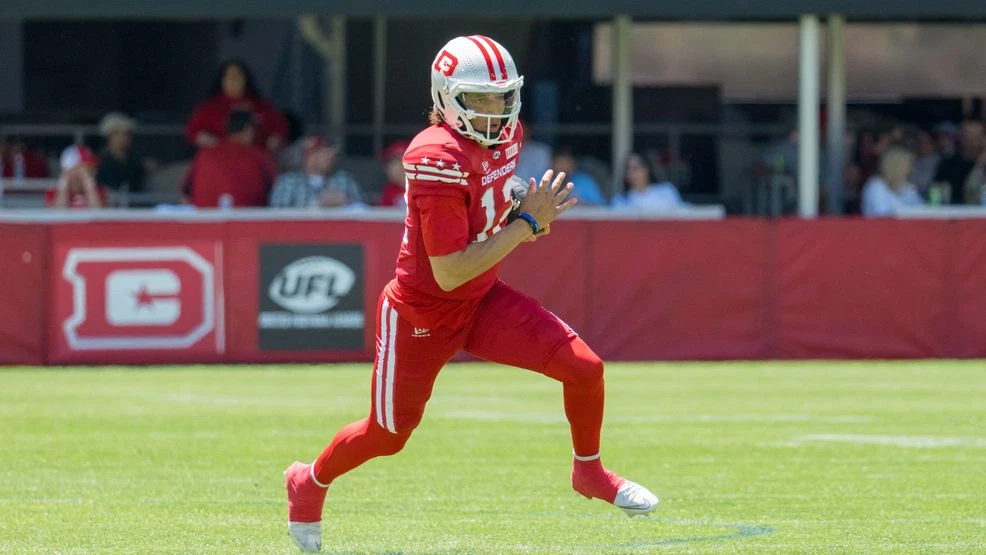
The United Football League doesn't pay like the NFL. Nobody expects it to. But the salary structure the league has built since its 2024 launch is more organized, and more generous, than many casual fans assume. For players grinding toward an NFL roster spot, understanding exactly what the UFL pays matters as much as the ufl standings or the ufl schedule. This ranking of the league's pay tiers tells a clear story about where the money goes and how it has grown.
The 2024 Starting Point
When the UFL kicked off its first season, active-roster players earned $5,500 per week. Across a minimum of ten weeks, that worked out to a $55,000 minimum salary for anyone who participated in all 10 regular-season games. Players under contract but sitting outside the active roster received $2,500 per week instead, roughly half the active rate.
Training camp carried its own separate rate: $850 per week. That number is lower than the regular-season weekly rate, which reflects the league's approach of tying the bigger money to game-week participation. A $400 weekly housing stipend ran alongside the regular-season salary, a small but real benefit for players relocating to cities like St. Louis for the Battlehawks or any of the other ufl teams spread across the country.
ESPN reported the base package slightly differently, citing $50,000 plus the housing stipend, but the more specific CBA-focused reporting from Sporting News and UFL News Hub landed consistently at $55,000 as the 2024 minimum. The ESPN figure likely described a different compensation component or an earlier internal calculation.
The CBA Changed Everything for 2025
Ahead of the 2025 season, the UFL and the United Football Players Association ratified a two-year collective bargaining agreement. The deal immediately raised the floor. Minimum salary for a player who suited up for all 10 games jumped to $62,005, an increase of $7,005 over 2024, which Sporting News calculated as a 12.7% raise.
That number sounds modest against NFL contracts, but the ufl vs nfl salary comparison isn't really the point. The UFL exists as a developmental league, and a 12.7% pay bump in year two signals that the league is taking player compensation seriously rather than treating it as an afterthought. Year-round health insurance came with the CBA as well. The league covers seven months of healthcare costs directly and offers continuation of benefits for the remaining five months. For players between NFL opportunities, that coverage matters considerably more than a single paycheck.
The accolade bonus structure adds another layer. Player of the Week earns $1,000. An All-UFL selection brings $2,500. Player of the Year pays $5,000, and the MVP bonus tops out at $7,500. These figures come from a single secondary source, so treat them as directionally accurate rather than confirmed CBA language, but they fit the league's broader philosophy of rewarding performance without blowing up the salary floor.
What 2026 Looks Like
The two-year CBA extends through the 2026 season, and the minimum salary is set to rise again, this time to $64,000. Multiple sources corroborate that figure, including UFL News Hub and a 2026 season explainer from The Sportscast, which confirmed that active players completing the full regular season earn $64,000 plus year-round healthcare and performance bonuses.
The jump from $62,005 to $64,000 is smaller than the 2024-to-2025 increase, roughly 3%, but it continues the upward trajectory the CBA locked in. For context, ZipRecruiter's aggregate data as of July 2026 listed average annual pay for UFL Football positions at $39,021, with top earners at the 90th percentile making $64,000. That gap between the league minimum and the aggregate average reflects the reality that support staff, coaches, and other football-adjacent roles get folded into those broader job category numbers. Active roster players at the minimum are actually sitting at the top of ZipRecruiter's reported range.
Contract Structure and Timing
UFL player contracts run from January 1 to August 24. That window covers training camp, the full regular season, and the playoff period, with the contract expiring in late summer. The structure means players know their financial commitment before the calendar year begins, which simplifies planning considerably compared to the uncertainty of NFL practice squad situations.
The inactive or non-roster rate of $2,500 per week still provides income for players who are under contract but not dressing on game day. That detail matters for ufl expansion conversations, since a growing league will inevitably carry more players on developmental deals rather than full active-roster spots.
The Bigger Picture
The ufl salary structure won't make anyone rich. The highest paid ufl player earns far less than even a league-minimum NFL rookie. What the UFL offers instead is structure: a defined minimum, a housing stipend, healthcare coverage, performance bonuses, and a CBA that has already delivered two consecutive pay increases. For players chasing NFL dreams, that combination is more valuable than the raw dollar figure suggests. The league has built something functional, and the numbers show it improving year over year.