
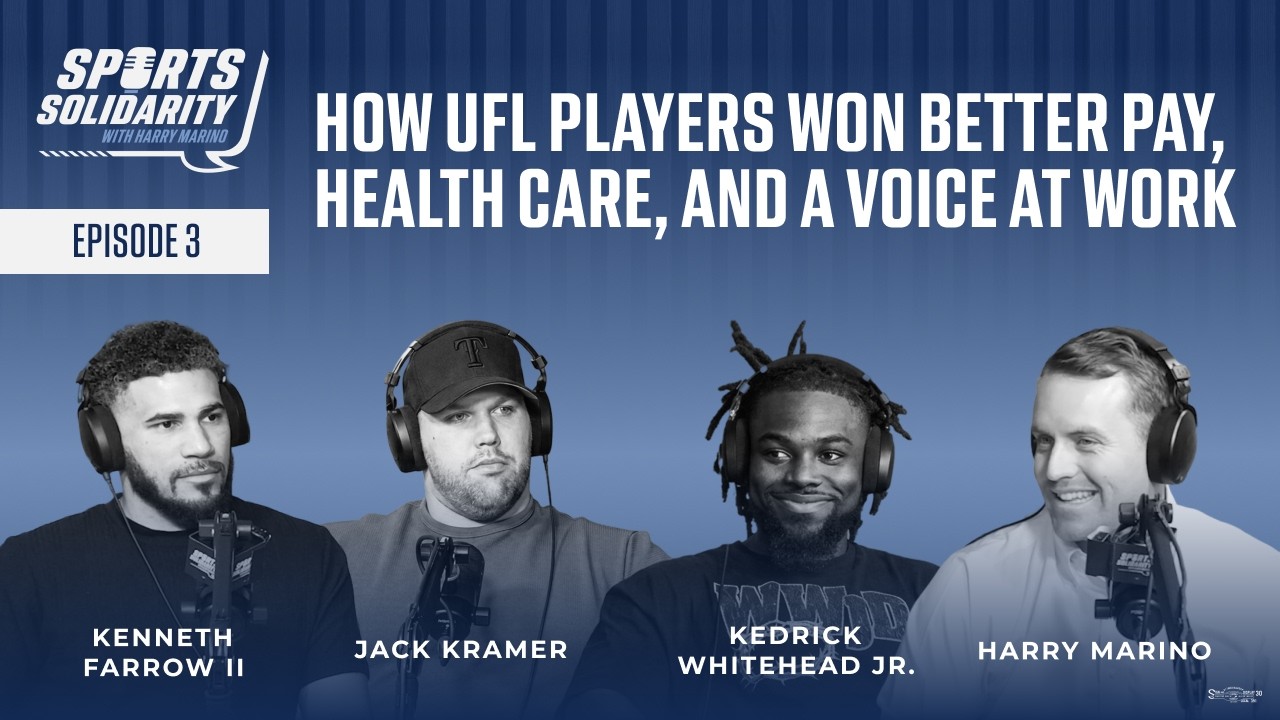
The United Football League made history in 2024, but not just on the field. Behind the scenes, players were building something that had never existed in spring football: a real union with real power.
Kenneth Farrow II lived through the chaos firsthand. The running back watched the Alliance of American Football collapse in 2019, then saw COVID kill the XFL. By the time the USFL and XFL merged into the UFL in 2024, Farrow had seen enough leagues fold to know players needed protection.
"Going through my playing career, I got involved in the spring leagues back in 2019 in AAF, XFL. Really at the early stages going through $27,000 for the year. And you know, just kind of shutdowns, COVID, they pulled the plug on the 2019 league and it finally just got to a point where we were like, okay, the next thing that pops up, we have to have a players union."
From 10 Players to 100 on Bargaining Calls
What started as a grassroots effort quickly became something bigger. Jack Kramer, who served as a player representative for Houston, watched the solidarity grow week by week during negotiations.
"Just to see that, I was super proud of, you know, that our word, as player reps, meaning something to the rest of the players in our locker rooms and just to see them show up for us and show solidarity as player union. That number in the little right corner of that Zoom grow each call from, you know, at first it might've been 10 to 15 and then 20, 50, 75 to over 100 players."
The growth wasn't accidental. Players like Kedrick Whitehead Jr., who joined the bargaining committee, went back to their locker rooms and explained what was at stake. These weren't million-dollar contracts they were fighting for – they were basic worker protections.
Healthcare, Housing, and Hot Meals
The issues that mattered most to UFL players sound familiar to any working person in America. Extended healthcare coverage topped the list for Whitehead, who trained hard in the offseason and needed protection against injury.
"Having health insurance for an extended period of time is something that was important to me as a guy who trains extremely hard in the offseason. God forbid I drop a weight on my big toe and I need something to make that feel better. I want to have remedies for that and I don't want to come out of pocket a million dollars just for a toenail falling off."
Housing stipends became another major battleground. Players were paying double rent – one back home, another wherever their team played – on salaries that weren't built for that burden.
"The last thing you want to do is worry about where you're going to lay your head at the end of the night," Kramer explained. "Some guys, probably a lot of guys are paying double rent or mortgage back home. So just having that little extra cushion in your pocket to make sure you're not stressed about it."
Even meal provisions made the priority list. These weren't pampered athletes asking for luxury – they were workers asking for lunch.
Real Player Power at the Bargaining Table
The UFPA's approach differed from traditional labor negotiations. Every proposal got vetted by players first. Every bargaining session included dozens of actual players on Zoom calls, not just union representatives speaking for them.
That player involvement became the union's secret weapon. League officials couldn't ignore 100 players showing up to support their negotiating team.
"What's that number in the corner? How many guys are showing up? How many guys care? Because they know that they need the players. And if the players are locked in on something, then they have to pay attention."
The strategy worked. Healthcare became the final sticking point, with negotiations stretching into the regular season. Players could have folded and accepted partial wins. Instead, they kept showing up until they got extended coverage.
Beyond Football
The UFPA's success offers lessons beyond sports. These players organized around issues any worker would recognize – fair pay, benefits, having a voice in workplace decisions. They proved that solidarity works even when you're not fighting for millions.
Farrow sees the bigger picture. "This has been a super just kind of inspirational time for me just to kind of see it all play out the way it has amongst people who aren't making millions of dollars. We were able to extract like $2 million to the player pool. That might not be much across individual, but that is a starting point."
For workers in other industries watching from the sidelines, the message from UFL players is simple: take the leap. "You never know what's going to happen, good or bad, unless you do," Kramer said. "Take the leap because you never know what's going to happen."
The UFPA faces another round of bargaining soon, with their two-year deal set to expire. But they've already proven something important – that workers who stick together can win, even in a league where players make regular wages instead of superstar salaries.