
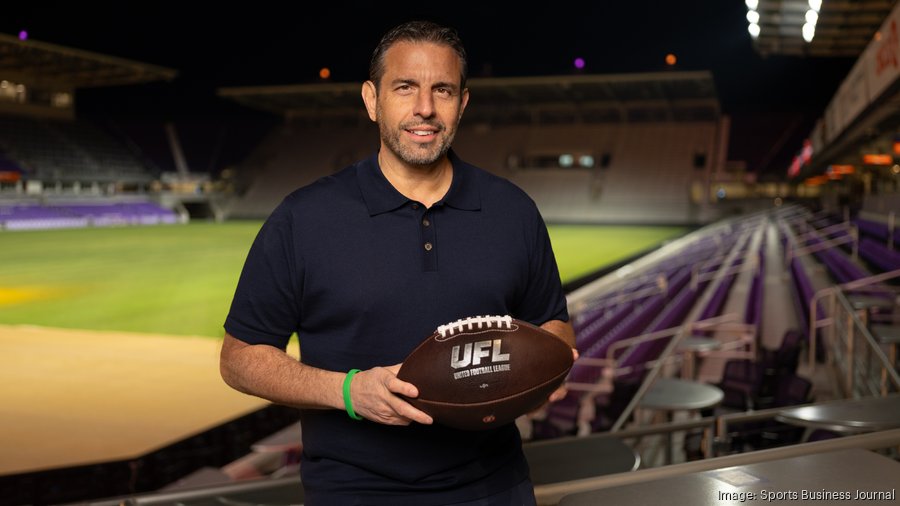
UFL Co-Owner Mike Repole recently sat down with Adam Breneman to talk, entrepreneurship and the United Football League.
Repole doesn't think like other sports owners. The man who built billion-dollar brands like Vitaminwater and BodyArmor has a simple philosophy that drives everything he does: "I wake up bankrupt every day."
That mentality — equal parts paranoia and motivation — is exactly what the United Football League needs. Spring football has been the graveyard of ambitious owners for decades, but Repole isn't just another rich guy with deep pockets. He's a serial entrepreneur who's cracked the code on disrupting established markets, and he thinks he's found the formula to make spring football work.
The Bankrupt Billionaire Mindset
Repole's approach to business sounds almost manic when he explains it. But there's method to the madness.
"I wake up bankrupt every day. I wake up at 6:00. At about noon, I made my first million dollars. By 6:00 PM, got about $100 million. At midnight, I'll have a couple billion. I'll enjoy 12 to 2 o'clock, and then I'll go to sleep from 2 to 6 and wake up bankrupt again."
It's that relentless drive that took him from a struggling 28-year-old who borrowed money from family to build Vitaminwater into the guy who sold it to Coca-Cola for $4.1 billion. When pressed about what would happen if he lost everything tomorrow, Repole doesn't hesitate:
"I would do exactly what I did this morning. Get up at f**k*ng 6 o'clock in the morning, work my fucking ass off, work 18-hour days, and do it again."
That energy isn't an act.
"I'm not a good enough actor," Repole admits. "If you love what you do, it's not work, it's life. When I wake up at 4 o'clock in the morning, I'm upset that I got to stay in bed for 2 more hours."
Why Spring Football Always Fails (And How to Fix It)
Repole sees the UFL opportunity the same way he saw BodyArmor versus Gatorade — find what the established players are doing wrong and do it better. For spring football, he identified three critical mistakes that have killed every previous league.
First, venue size.
"Baseball stadiums are getting smaller, and if they're not smaller, they're empty," Repole notes. "What makes the United Football League think that they can play in a stadium with 60,000 to 80,000 people? You're crazy."
His solution borrows from soccer's playbook. The rise of MLS created perfect 10,000-25,000 seat venues that didn't exist a decade ago. Repole went to soccer games and had an epiphany:
"I started to envision what would a football game look like inside this outdoor arena and stadium, and I started to think, this is arena football outdoors."
Rule Changes That Actually Make Sense
While other leagues have tried gimmicky rule changes, Repole's modifications come from watching the game evolve. The 4-point field goal from 50+ yards wasn't born in a boardroom — it came from watching Brandon Aubrey nail a 63-yarder for Dallas.
"He kicked one in overtime to win it. But right there when they said Brandon Aubrey, UFL, 63-yarder, I said, imagine if they were down 3 and he's lining up for a field goal from 63 yards to win the game."
The no-punting inside the 50-yard line rule addresses pace of play.
"Seeing a guy punt it to the 1-yard line doesn't make me celebrate, then get 3 first downs so he can punt it back to the other side. That's boring to me," Repole explains.
Even eliminating the tush push came from practical conversation with his coaches about player safety. Though Repole admits with a laugh:
"I asked how many tush pushes we did in 3 years. We did 1. So I cut a play out that we did once in 3 years. But we got people talking about it, right?"
Community Over Corporate
The third piece of Repole's strategy focuses on local connection.
"We have to be a fabric of the community," he emphasizes. "If we're gonna make it within a couple years, The Orlando Storm are gonna be based here. We're gonna have to figure out a model."
That means affordability ("where it might cost you $100 to park at one of your football games, you can get a family of 5 in here for $100") and entertainment value with halftime shows that appeal to more than just hardcore football fans.
The Bigger Picture: Football as King
Repole's biggest bet isn't just on the UFL — it's on football's continued dominance of American sports culture. The numbers back him up.
"The NFL has 85 of the top 100 shows," he points out. "College football viewership gets 10 million a game for bowl games. The NFL Draft round 1 gets 15 million people. Game 7 of the NBA won't get 15 million people."
His conclusion:
"Football's become king. So why can't football be year-round?"
With Fox and ESPN as both broadcast partners and investors, plus backing from Redbird Capital, Dany Garcia, and The Rock, the UFL has the infrastructure previous spring leagues lacked. But Repole knows success comes down to execution, not just capital.
"I don't want to become the Savannah Bananas," he clarifies. "But it's high-quality football. It's coaches that are either up-and-coming coaches or coaches that have coached somewhere else. And we have 35 players in the NFL."
The UFL season kicks off with games that should feel electric in packed smaller venues, with rule changes designed to create more scoring and excitement. Whether Repole's vision translates to sustainable success remains to be seen. But if his track record of turning 1% chances into billion-dollar exits means anything, spring football might finally have found its formula.