
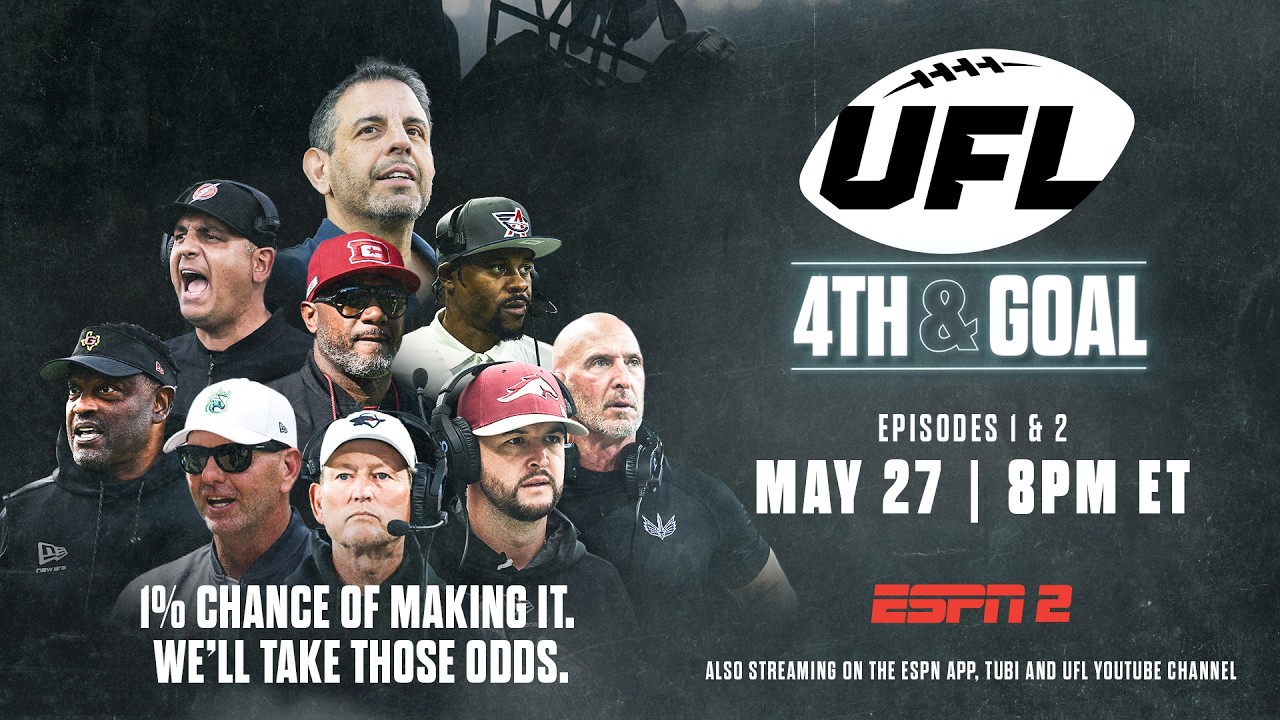
The first two episodes of the UFL's documentary, 4th & Goal, aired Wednesday night beginning at 8pm EST on ESPN2. After watching both episodes, here are my main takeaways.
-The UFL isn't shying away from controversy. Spring football has had a complicated relationship with playing into controversy as a way to attract attention. The XFL in 2001 made it part of the fabric of that league. In 2023, the XFL was all about supporting players, and anything that even hinted at impropriety was ignored. For the most part, the UFL has followed this mantra as well. Until now. Just in the first two episodes, players being released at final cuts was shown - including Kwamie Lassiter pushing back against Louisville Kings Head Coach Chris Redman and Birmingham Stallions head coach A.J. McCarron advising a player they needed to get into better shape. The second episode ended with the news of Columbus Aviators Head Coach Ted Ginn getting a DUI, which is the hook for episode three. So far, this show has been raw and honest, which is what fans are generally looking for in content of this nature. We'll see if the league as a whole follows in embracing this kind of controversy outside the confines of just the 4th and Goal show.
-You can see why Mike Repole can draw people in. In football, you need to be a people person. Mike Repole is certainly that. The child-like joy he showed after he heard there was a fight when pulling up to practice. The joking around with Birmingham Stallions players when giving them a pep talk after that very practice. The whirling dervish he becomes when talking about something that excites him, arms flailing, moving from side-to-side while speaking. He's a ball of energy and that energy is infectious. This show gives you the idea - if there was any doubt - he's certainly all-in on the idea of making the UFL work.
-Chris Redman seems like a genuinely nice, wholesome guy. Sometimes we think of football players as larger than life, with egos to match. Redman came off as anything but. A former star at the University of Louisville and draft pick by the Baltimore Ravens, Redman doesn't give off the vibe of an NFL Champion, even though that's part of his curriculum vitae. The story of his son's battle with cancer was moving and the kind of personal tale that helps motivate fans to support the league and its members. The ultimate example of Redman's wholesomeness from the episode? He revealed he got the call about the Kings job after leaving church.
-A lot has changed since Week One. This UFL season has flown by at a breakneck pace, and yet with both of the first two episodes reflecting back on Week One, you can see just how much has changed. Louisville vs. Birmingham was the focus of the first week, and now neither starting QB from that game is on that team's roster. RB Benny Snell is also gone, and he seemed dissatisfied that he was not in the game for a goal-line run that ended with an Ian Wheeler fumble. Episode two was about Dallas's rise over the first two games; that turned out to be their apex, as they've been nose-diving ever since.
-Austin Reed's mobility put him over the top of Luis Perez for Dallas starting QB. It was a shock to many - including players around the league - when Reed was announced as the Renegades' starting quarterback over the Spring King. Head Coach Rick Neuheisel wrestled with the decision but figured that in a spring league setting, Reed's mobility would be an asset. In episode two, we got reaction from Reed, Perez, and others about the decision, and Perez doing his best to embrace his role as a backup early in the year.
-Perez will make a great coach one day. Perez's attention to detail is well known, and the episode showed him going over play calls on his own, rehearsing his cadence and just generally diving into the playbook. But it's his personal interaction with other players that will take him from "good" coach to "great." There was a scene where he runs into an opponent in the hallway and just makes small talk with them. It's a side of Perez we don't often see in the cloistered world of press conferences or sideline interviews. If coaching is what he chooses to go into after his playing days are done, he'll likely find success beyond that of his on-field career thanks in part to his interpersonal communication skills.