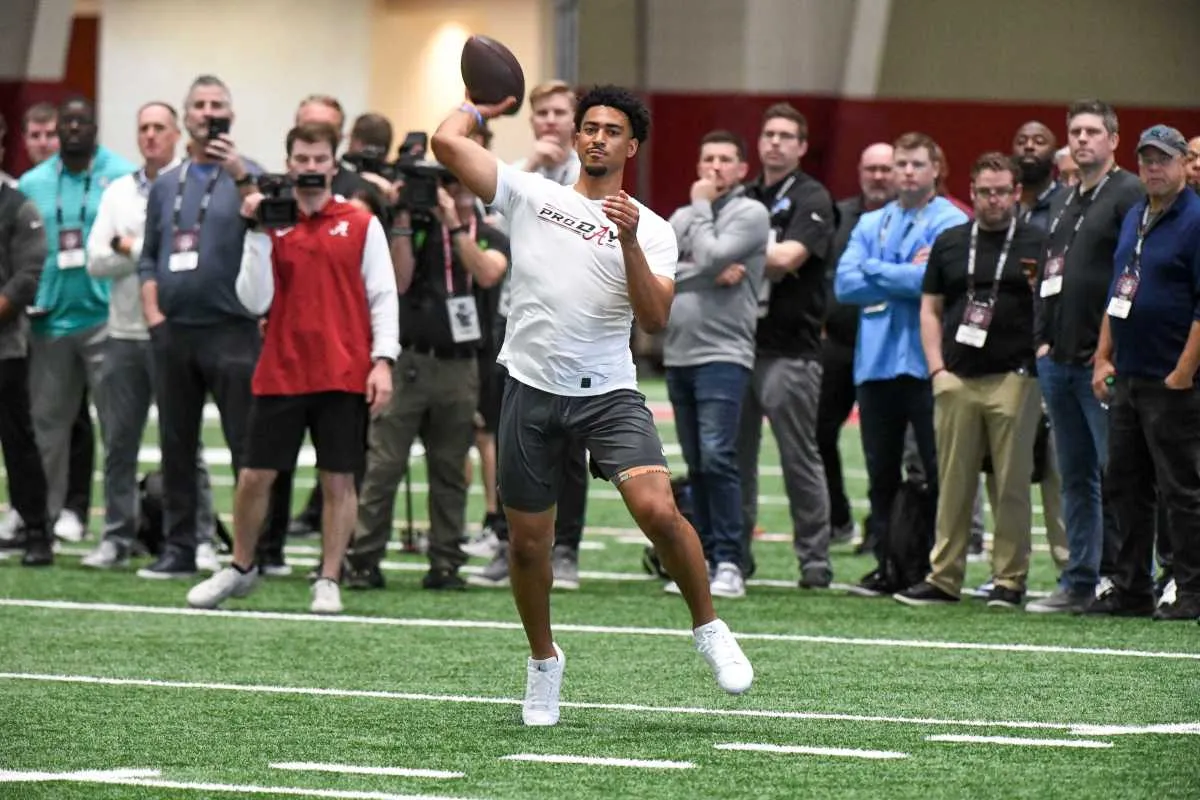
The pre-draft process is in full swing in the NFL. College football season has ended, all-star games have taken place, and the Combine has come and gone. One of the final boxes for decision-makers to check before next month's draft is pro days. Officially known as Pro Timing Days, schools hold workouts for all of their draft-eligible players, allowing for physical testing and on-field workouts in front of NFL front office personnel. For those players not active on the all-star circuit and without a Combine invite, this is their one and only opportunity to catch a team's eye outside of their game tape.
In 2022, while preparing for the league's return to the field under new ownership in 2023, the XFL sent scouts to pro days. Director of Special Projects, David Dykeman, and Director of College and Professional Relations, C.J. Cavazos, were the boots on the ground at these events. Occasionally, Doug Whaley would come out as well. Since the XFL's merger with the USFL, the UFL has not had a presence at pro days.
The importance of pro days to the UFL wouldn't necessarily come from timing a player running a 40-yard dash or watching a running back run routes out of the backfield. Tape of these events can be requested by leagues, and the numbers put up by players are often made public by schools themselves (if not, they can be accessed via other scouts). Rather, in a league still trying to make in-roads in the professional football community, it's the relationships with players, agents, and schools that are left wanting.
It's been established that the UFL has a pretty good on-field product. But it could be better. And that comes with convincing top-level talent not under NFL contract to choose to suit up in the league. The UFL still has some work to do in that regard. Nearly 100 players drafted by teams in the reshuffling of rosters in February opted to get into coaching, retire, or chase an NFL deal instead of playing spring football. Just seven of the more than 500 players that ended seasons on NFL practice squads chose the UFL, with most preferring the Hail Mary of a futures deal. There are still key decision-makers who look skeptically at the UFL: They hear about the low pay, they see the empty seats during games, and they know the history of failure in the spring football space.
Having UFL representatives at these events adds credibility to the league and gives players and agents an avenue to get in touch with the league and vice-versa. Something as simple as, "hey, if the NFL doesn't work out, we'd love for you to reach out to us." You'd be surprised at how much that could make a difference in a player's mind. With the UFL changing things up in their player acquisition process this year, a lot of players and agents were left in the dark about how to get on the league's radar. They no longer had general managers with whom to contact. A more streamlined process and better communication with those tasked with getting players noticed would be a benefit for the UFL. Having a presence at these pro days could do that.
Similar to the title held by Cavazos in the XFL, the UFL should have someone whose job is to be the liaison to college programs. Players should be schooled early on in the fact that if the NFL is not an option, the UFL can be. And with the help of colleges themselves, that can be arranged. The more information these players have about spring football early on, the more likely they may be to have a positive attitude about the game. Having that kind of access and communication with collegiate programs, cultivating those relationships, has very few drawbacks.
The argument against such a move this year is that the UFL has limited capacity to send their scouts on the road. Teams are in training camp right now, and those scouts are actively helping find talent to add to their rosters. We've had transactions nearly every day, so it would be difficult for them to leave Arlington and traverse the country while also being plugged-in to the needs of their teams. Of course, technology makes that a lot easier. In the future, it also wouldn't hurt to have a few scouts working underneath those acting as de facto GMs; they could be the ones to attend pro days and all-star games this time of year. If the UFL moves its season up to February, pro days would be happening mid-season instead of during camp. It's unclear if that would make it easier for scouts to attend.
There's another reason the UFL should be interested in cozying up with players, agents, and schools: CFL teams are sending scouts to these pro days. And the UFL is most certainly in a battle with their cousins up north for talent. The UFL lost its league MVP, Bryce Perkins, as well as Max Duggan to the CFL. Both would be welcome additions to most quarterback rooms as they stand in the UFL. That doesn't mean players would automatically choose the CFL over the UFL; but why let the CFL teams get free reign to be out there, unchallenged, as an option for these players, many of whom won't make the NFL over the long-term and may be deciding what their next football step should be?
The UFL is still in cost-saving mode, and sending scouts all over the country for pro days probably isn't in the budget - and may not be for a few years. The benefit of having a presence at these workouts, convincing schools and agents that the UFL is a viable option for any player whose NFL dreams wane, could be incalculable. Even if one player makes the UFL after the seed is planted at their pro day workout, it would be worth it.