
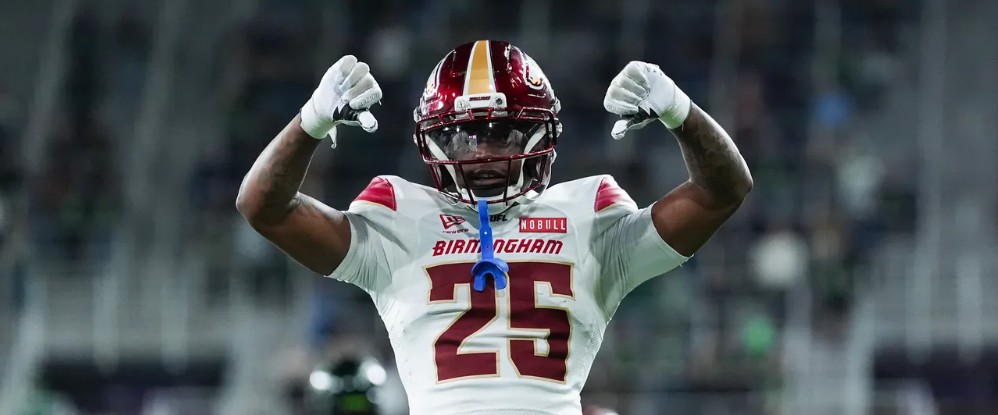
The UFL's announcement that it's leaving the Birmingham market (along with Houston) this week is more than about just losing the Stallions franchise.
It's more than just another year of relocation for spring football that has only had the same eight teams in back-to-back years once since 2022.
It's more than just broken promises by Mike Repole and fans not showing up often enough to Protective Stadium.
It's about the city of Birmingham itself.
Birmingham should be the shining beacon on the hill for spring football. It's the exact kind of market spring football should succeed in: One that doesn't have a Big Four pro sports team to gobble up the interest and dollars of the fans. But it's also one that has a hunger for college football, with the University of Alabama not that far down the road. The city's governmental leadership was on-board and always seemed receptive to the UFL, as opposed to ignoring it as some have done.
It's the 45th-ranked television market by size per Nielsen, putting it on the smaller end of UFL teams. However, Oklahoma City, already announced for expansion in 2028, is two spots down at 47. Another market oft discussed in the spring football space, Omaha, is even further below, in 73rd. So clearly market size is not a deterrent. And even so, television ratings have consistently been strong in the area.
In the graveyard of spring football leagues, Birmingham has always been well-represented, if not well-attended. From the original USFL Stallions to the Fire of the World League to the Thunderbolts of the original XFL to the Iron of the AAF. There's a reason leagues keep coming back.
When the USFL rebooted in 2022, Birmingham was selected as the league's headquarters, where every game would be played that season as part of the cost-savings initiative to get the league off the ground. The city opened its doors to the USFL, and that may have been both the best and worst thing for the future of the Stallions.
Working hand-in-hand with the city allowed league management and elected official to see the importance of the Birmingham market to spring football. But it may have played a role in oversaturating that market, specifically with the cheaper tickets available for many of those games. That just wasn't a sustainable business model after the merger.
Birmingham SHOULD'VE worked. And maybe if Repole didn't have such a stringent mandate about the size of stadiums, the Stallions would still be here, still be given a chance TO work. Heck, even for St. Louis to stay in the BattleDome, Repole has made it clear they need to draw at least 30,000 fans. They dipped well below that this year, making the team's future in that stadium tenuous. There are no sacred cows in Repole's UFL.
In Protective Stadium, which seats 47,000 for football? You'd probably need to average at least 20,000 for Repole to be satisfied, and the Stallions were far from that. Even with the UFL reportedly paying zero rent to play in the stadium, it just wasn't going to work for Repole from an optics and live atmosphere standpoint. On one hand, it's refreshing to have an owner where everything is not about the money - clearly this deal was financially advantageous to the UFL and yet, it wasn't good enough for Repole.
There isn't much in the way of positive history when it comes to the modern era of spring football, but Birmingham represented that. Skip Holtz and his three-time championship-winning Stallions were the dynasty spring football was defined by for the last half-decade. They were the model for how teams should be run on and off the field. And now, poof, gone, as well as the recent history the team represented.
So Birmingham, a model city for where the UFL should be going, is gone, and the blame game has ensued. Not enough local marketing, say Alabamans. Not a high enough attendance, the other side claps back. Of course, as with most things in life, there's not one easy, clean reason as to why Birmingham didn't work. It should have, though, and that's the frustration a lot of fans both inside and outside Birmingham have felt in the aftermath of this decision. It's a cautionary tale for other markets that fit so many of the requirements Repole is looking for - success anywhere beyond the first few years is no guarantee.