
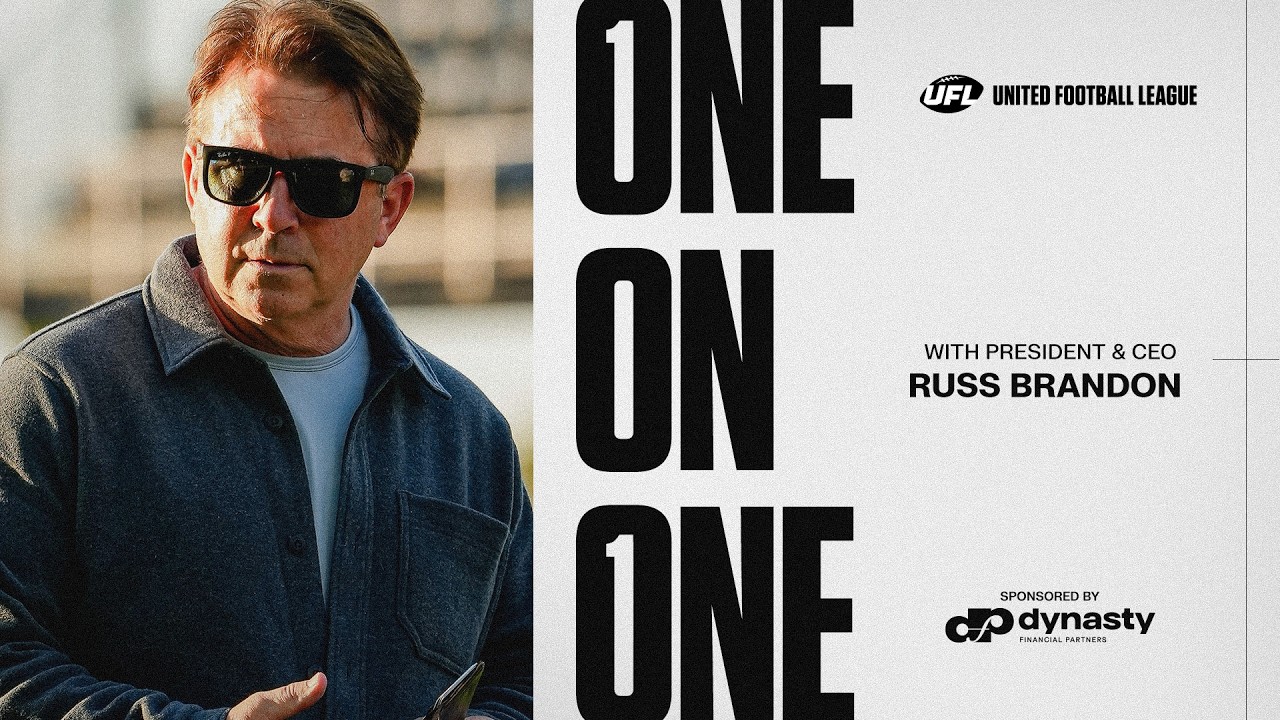
The UFL isn't just trying to survive — it's plotting an aggressive expansion that would double its current roster of teams by 2035. League President and CEO Russ Brandon revealed the ambitious timeline in a recent interview, while crediting owner Mike Rapoli's unconventional leadership style for keeping the spring football league grounded in reality.
"If we don't have 16 teams by 2035, it's a personal failure," Brandon said, channeling Rapoli's exact words. The league currently operates with eight franchises after undergoing major restructuring for the 2026 season with new teams and relocations.
Why Previous Spring Leagues Failed
Brandon's NFL experience — including 21 years running the Buffalo Bills — gives him unique insight into why alternative football leagues typically crash and burn. His diagnosis is brutally simple: "There's two reasons these leagues have never made it: ego and expense."
The ego part hits close to home for any executive who might try to replicate the NFL's operational model. "You got a guy like me that comes in and goes, oh, we're going to do it just like the NFL. We're going to do it all this way. You can't, right?" Brandon explained.
"Hence the hub model. Hence the reason we have 700 people in Arlington, Texas right now. It's so unique."
The Arlington Hub Strategy
That Arlington hub represents everything different about how the UFL operates compared to traditional sports leagues. All teams practice and live in one central location, a logistical approach that would be unthinkable in the NFL but makes perfect sense for a league operating on survival economics.
"We charter on one plane. Both teams, right? Everything we do, we have to do in a different— we have to think differently," Brandon said. The hub model keeps costs down while still providing players with top-tier facilities that rival what they experienced in major college programs.
Brandon emphasized the quality standards they maintain despite the cost constraints: "There's so many athletes on that field right now that were playing in the SEC, the ACC, the Big Ten. They're used to a certain level. And experience. And we tried our best to replicate that."
Rapoli's Left-Hand Leadership Philosophy
The man driving this unconventional approach is owner Mike Rapoli, whom Brandon describes as a "force of nature" who has fundamentally changed how he thinks about running a sports organization.
"I've learned more from Mike in the past 7 months than I think I've learned in the last 15 years. Here's how I always describe him. I'm right-handed. He makes you play with your left hand."
That philosophy extends beyond just operational decisions. Rapoli constantly reminds his team that "we're in survival mode. We've got a 1% chance of making it." It's not pessimism — it's realism about the graveyard of failed football leagues.
Local Market Development
While the hub model handles operations, Brandon knows the league's long-term success depends on building authentic connections in each team's home market. "We got to build out the local markets. We're working our tails off at that," he said.
The results vary by city. "We have some markets that are doing really well. We have some markets that need a little bit more TLC." That honest assessment reflects Brandon's broader philosophy about transparency with fans and stakeholders.
Brandon's formula for fan engagement comes from his NFL experience:
"There's no magic formula. It's just putting good people around a good process. It's about being authentic. It's about a very good product with a very good value proposition and, and being truthful to how we're trying to build the business."
The UFL's survival and expansion plans will test whether this combination of operational efficiency, cost discipline, and local market development can finally crack the code that has stumped every previous attempt at alternative professional football.