
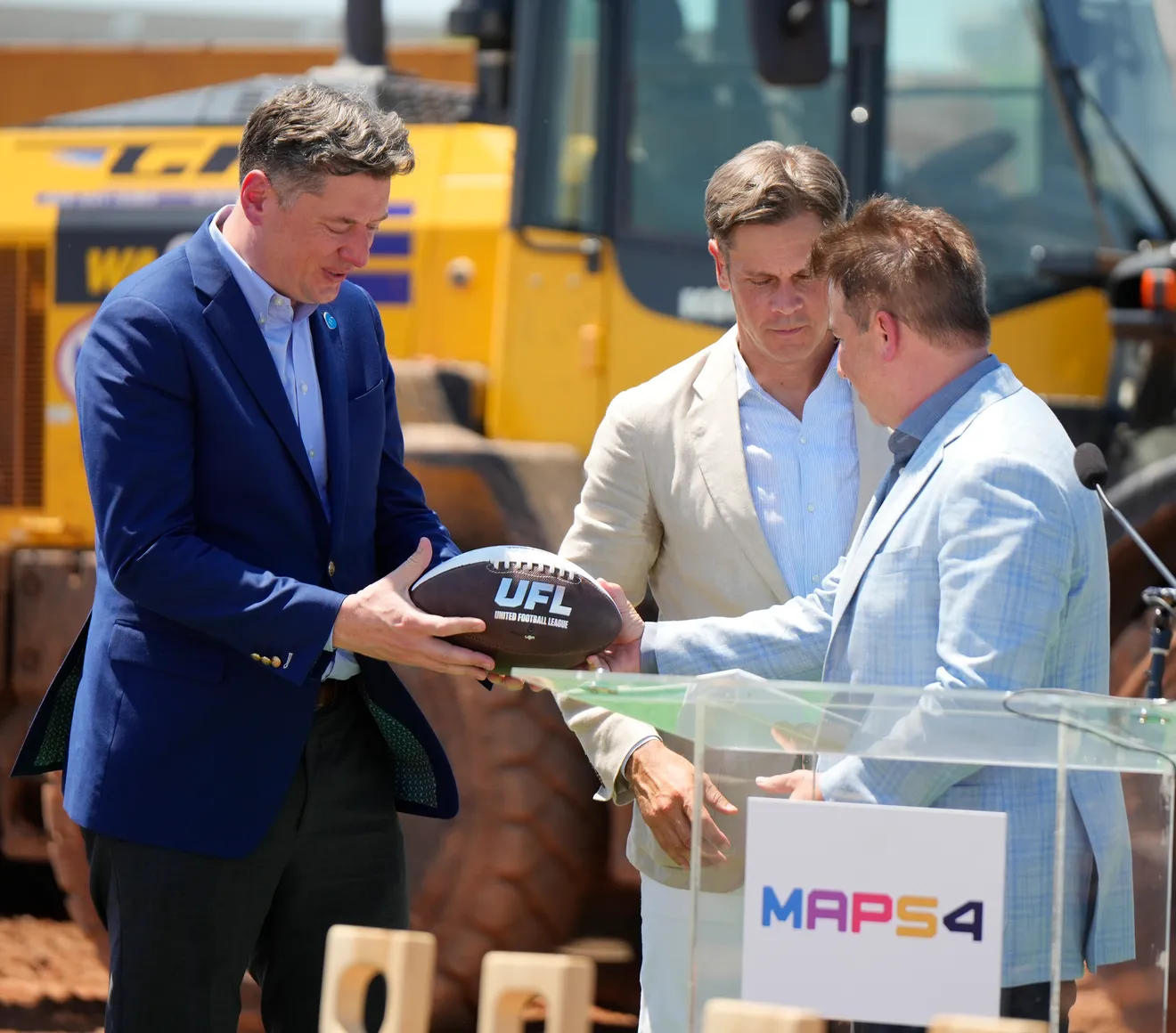
UFL co-owner Mike Repole has made expansion one of his key goals since investing in the league last year. He has set a high bar: 16 teams, or double the current number of franchises, by 2034. Oklahoma City and Utah have already been announced as expansion locations for 2028, the first time modern spring football of this size will have increased the number of its teams.
One of the selling points of the merger of the USFL and XFL into the UFL was that by decreasing the pool of players in moving from 16 teams to eight, the quality of play would increase. And based on our survey results the last few years, many fans believe that did indeed occur. Now, the league is expanding back out and is facing the challenge of maintaining that high quality of play while adding teams and players.
The UFL's Take
I asked UFL CEO & President Russ Brandon on a recent media call what can be done to ensure quality of play does not get watered down as the league grows. He cited several examples of how the UFL is tackling this potential issue. The first: As the league has shown its growth and viability over time, interest among top-level talent not in the NFL continues to increase.
"When people knew, 'hey, this is a long-term, viable, sustainable league,' that has also improved the player pool from the standpoint of, agents might not have returned your calls five years ago and now we're getting calls from reputable people on the daily...I think that is going to continue to be the case," Brandon said.
The UFL has persisted in recruiting more and more high-quality players who, for whatever reason, are not in the NFL. That pool of high-quality players is finite, however, and the league needs to continue to work on developing players as well, including ones that come from smaller schools or who are discovered at UFL Showcases. Brandon believes the league has the coaches in place to do just that.
"We continue to get great coaches that we've been able to attract," Brandon said. Those coaches are necessary to not just develop raw talent who may not have even sniffed the NFL, but to get those fringe NFL players back to the big league. That, after all, is a major attraction of the UFL: Players can come, put their work on tape, and make it back to the NFL on a more permanent basis. The UFL needs quality coaching staffs to make that happen. Like with players, as the league shows itself to be a long-term project, top-notch coaches may want to join up, perhaps intrigued by a schedule that would allow them to get away from the NFL or college grind.
Brandon also cited the scouting department as playing a role in attracting these players. Having the number of pro and college contacts that the UFL's scouting department has can make things easier when it comes to reaching out to players and agents about entering the UFL. Their experience scouting for NFL teams also helps in assuring players end up in situations advantageous to them, taking into account scheme fits and other variables.
What else can the UFL do to ensure the on-field product remains high?
There are other avenues the UFL can explore as it seeks to maintain a high-quality on-field product even as the league expands. The following are some suggestions:
Add three-day minicamps prior to training camp: Ahead of the 2020 XFL season, the league conducted a short minicamp with each team. Despite being the first season these teams played together, the game play in the regular season was solid. Were minicamps the sole reason? No. But if the UFL isn't willing to increase time in training camp, they can at least get players on the field working together for some brief offensive and defensive install, allowing coaches to add more wrinkles and spend less time on the basics once training camp does arrive. If the UFL is able to strike a deal with each franchise's city, minicamps could even be conducted there as a way to increase interest by allowing fans to attend these practices. That could be an issue in cold weather cities like in Colorado and Rhode Island, unless an indoor facility can be procured.
Lengthen training camp: The UFL already added time to training camp in 2026; they could still add more. NFL training camps run from mid-July until late August. UFL camp lasts about half as long, and the NFL also has other phases of off-season workouts to compliment camp, phases the UFL does not have. Allowing for more training camp practices would mean teams have more time to gel with one another on the field and would allow coaches to expand their playbooks.
Conduct meaningful pre-season games: Right now, UFL teams hold multiple joint practices in camp, though the environments are restricted and controlled. Preseason games mean teams can iron out wrinkles and get used to playing with each other. Just as importantly, players (and coaches) can get used to the unique game play and clock rules the UFL employs to lessen mistakes in those areas during the regular season. The other benefit is it allows coaches more relevant tape to make sound roster decisions. We've seen times recently where players were cut at the end of camp, only to re-sign and play a significant role on that team. Toa Taua in Michigan comes to mind. Perhaps by competing in actual game situations, those players wouldn't be discarded at the end of camp.
Don't hold players out of the league for nebulous reasons: Several former spring football players took to social media last year to claim they were being blackballed; they alleged that coaches wanted them, but the league was not signing off. That led to some accusing UFL management of everything from keeping veteran players out of the league to having a bias against those with USFL ties. A source reached out to me around that time to say the real reason the league wasn't hiring those particular players is that they all filed workman's comp claims in the off-season, which required the UFL to pay them during that time. Whatever the reason, the UFL would be wise to seek out and accept any and all players of the highest quality, even while it strives to be a developmental league for the UFL.
Pay the players more: Of all suggestions, this might be the biggest factor in moving those that may be undecided about taking the UFL leap. I also understand that the league is handcuffed by its financial situation. The reality is the UFL has lost some key pieces recently not just to the NFL, but to the CFL, including former league MVP Bryce Perkins. This off-season, players who have gone north include Defenders DE Derick Roberson, Battlehawks QB Luis Perez, Storm RB Tre Stewart, Battlehawks OT Bradley Ashmore, and more. Some may return to the UFL for 2027 and double dip, but Perkins didn't in 2026, so it's no guarantee any of these players come back. The two major reasons players would seek to play in alternative football leagues is for the chance to get back to the NFL and for the money. The UFL has put more players into NFL training camps than the CFL, so that just leaves the money. You can make, on average, almost double the UFL salary in the CFL, so it might be worth considering more competitive pay.
Partner with the NFL as an official developmental league: I'm not necessarily advocating this tact - and it would take buy-in from the NFL, which isn't something they appear in any hurry to do - but a partnership would go a long way to ensuring quality of play in the UFL remains high even with the addition of up to eight more teams over the next eight years. It would open up a whole new pool of players: Those already on NFL teams. Those teams could farm out practice squad players or allocate other bottom-of-the-roster talent in order to get them the kind of reps they just don't get during training camp or the regular season. It would be a de facto NFL Europe right here in the United States.
Based on Brandon's comments, UFL management seems to understand the challenge they face: "(It's) something we look at each and every day," Brandon said of the quality of play on the field and of the players they're bringing into the league. The problem is many of the ways to address this challenge cost money or present logistical hurdles (such as needing to negotiate these into player contracts), none of which the UFL seems poised to handle in the near future. Perhaps by the time they reach that 10-or-16-team goal, the league will be in a more financially healthy position to properly keep the quality of on-field play at an acceptable level so as to retain its current fans and recruit new ones.