
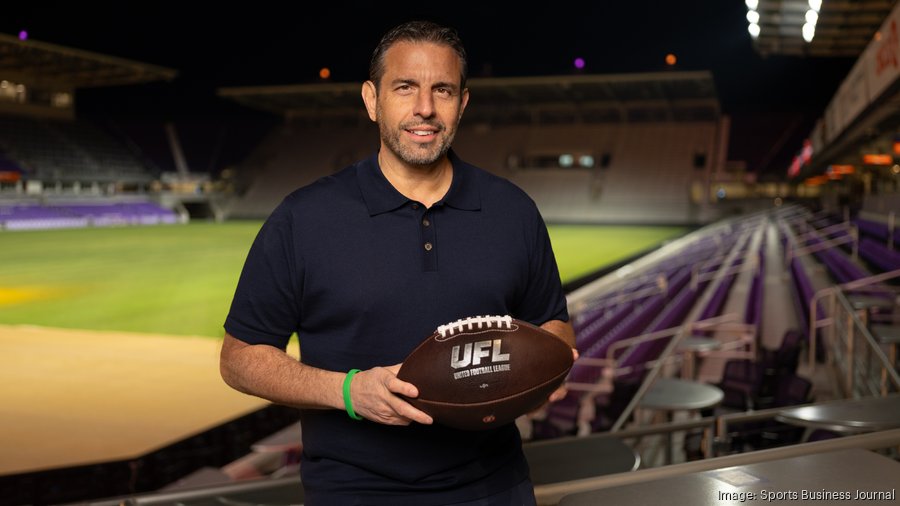
When UFL co-owner Mike Repole took over the league’s management in 2026, he promised significant changes. Repole saw the potential for the UFL to become a premier spring sports attraction. However, the current league structure wasn’t sustainable as a long-term investment.
An eight-team professional sports league was never going to be big enough to succeed on the scale he envisioned, and Repole didn't become a beverage billionaire by thinking small. As he saw it, for the UFL to compete in the over-crowded spring sports market, the league had to expand and become a larger national presence.
Achieving success with the UFL, where previous spring football iterations had failed, became a passion project for Repole. "I'd rather go bankrupt than fail at this league. So now, I got two choices, either make the league work or go bankrupt.”
Laying the Foundation for Long-Term Growth
In his quest to ‘make the league work,’ Repole immediately began implementing key changes across the board. Eliminating the disastrous optics of football games being played in mostly empty stadiums, he signed agreements to move several of the existing teams to soccer arenas. Repole knew playing football in smaller arenas would lead to a more intimate, boisterous, and enjoyable fan experience,
Teams in cities with poor attendance records that lacked smaller arenas were shut down. Despite fan outcry, the San Antonio Brahmas, the Michigan Panthers, and the Memphis Showboats became casualties of Repole’s initiatives. Undeterred, he sought cities with smaller arenas and no professional football presence. Predicting these cities would welcome a UFL team, he opened expansion franchises in Louisville, Kentucky, Orlando, Florida, and Columbus, Ohio.
Relaunching the League
Then, Repole went to work re-marketing the league. The goal was to relaunch the UFL as a family-friendly entertainment experience, reflective of the host city culture and the local communities.
Where the UFL’s previous marketing efforts failed to establish sufficient community engagement, Repole’s team succeeded. The first step was connecting the teams to reflect the host city’s unique flavor and atmosphere. Creating brand awareness and unifying the eight teams, the league introduced the UFL "United We" campaign, with each team adopting its own unique rally cry.
Next, special themed games were announced, celebrating the Kentucky Derby in Louisville, or the “Battle for Texas” between the Dallas Renegades and the Houston Gamblers, along with commemorative merchandise giveaways. A league-wide “Hats Off To Heroes” celebration honored local military service members, first responders, and their families with free admission for specially designated home games. Throughout the season, popular halftime musical guests were scheduled, spanning a wide range of music genres.
Coaches With Ties to the Community
Overhauling the existing UFL coaching staff, Repole retained only two coaches from last year: D.C. Defenders championship-winning coach Shannon Harris and former St. Louis Battlehawks’ coach Anthony Becht, who he reassigned as coach of the Orlando Storm expansion team.
In handpicking the other new coaches, Repole deliberately chose individuals with a personal connection to that city. Louisville native Chris Redman was the perfect choice to lead the Louisville Kings. Winner of the Johnny Unitas Award as the star quarterback of the Louisville Cardinals, Redman later earned a Super Bowl ring as a member of the Baltimore Ravens' 2001 Super Bowl team.
Alabama native and Crimson Tide standout, A.J. McCarron, had years of experience as an NFL quarterback before taking his talents to the UFL. He set multiple records as the Battlehawks’ quarterback before being named the new head coach of the Birmingham Stallions.
Hired to coach the Columbus Aviators, Ted Ginn, Jr. was a star wide receiver at Ohio State University before he began his NFL career as a first-round draft pick of the Miami Dolphins.
Successful veteran football coach Kevin Sumlin enjoyed many successful years as a collegiate coach in Texas before accepting the head coaching position for the Houston Gamblers. Finally, former NFL veteran wide receiver Ricky Proehl won the Super Bowl with two different teams, including the St. Louis Rams, before coaching NFL teams. Proehl was an ideal candidate to take over as the Battlehawks' new coach.
Changing the Rules
Repole sparked initial fan interest and curiosity. However, keeping the fans engaged and selling out stadiums in the midst of other competing spring sports was another matter. Envisioning a spring football league where the games were thrilling and highly competitive, he determined the best way to guarantee that was by giving teams an increased opportunity to score.
Changing the rules of the game, Repole added the extra incentive of a four-point 60-yard field goal and eliminated the option to punt once the offense crossed the 50-yard line. As a result, the 2026 games were action-packed, leading to several come-from-behind victories and the highest scoring outcomes in spring football history, with an average of 45.2 points per game.
Engaging the Fan Base
Understanding the value of a dedicated marketing campaign, Repole saw an opportunity where the UFL had failed to connect with fans in the past. Using his marketing prowess to build and re-engage a disillusioned fan base, Repole opened the lines of communication, soliciting fan feedback through social media. Setting the stage for ongoing dialogue, he told the fans that building this league was a joint effort and sought their input on everything from team mascot names to how the league could improve the fan experience.
UFL fans began to respond.
Taking Fan Concerns Seriously
More importantly, Repole listened. Whether an expression of team support or disgruntled fan outrage, he took the time to respond directly to the commentary. When a problem was brought to his attention, Repole acknowledged the issue and often took immediate steps to correct the problem.
When a Week 3 overtime game between the Orlando Storm and the Louisville Kings was decided by a controversial penalty call, fans were outraged. Complaints flooded in. Repole agreed. He acknowledged the fans' frustration, replying immediately on social media.
"I don't like it either. I hear you guys. We owe our fans better.”
Less than a week later, the UFL issued a rule change to ensure a penalty call would never again determine the winner of an overtime game.
Similarly, when a scheduling snafu prevented the 8-2 Storm from hosting a home playoff game at Inter & Co Stadium and instead scheduled to be played in Columbus, Ohio, Orlando fans were incensed. Repole’s team responded to the uproar, finding a closer venue in Daytona, Florida.
Apologizing to the fans and taking full accountability, Repole called it both “a great problem and a terrible problem” because it demonstrated how passionately fans cared about the league.
“I mean, I was the most hated guy in Orlando. I joked that I had to pull my daughter out of school. It was amazing the negativity that we got. Honestly, I didn't think people would care that much. There was an uproar and it was nuts, and that was a good thing."
An Atmosphere More Conducive To Spring Football
The smaller venues made for a fan-friendly crowd experience that contrasted sharply with the televised images of games played in the empty stadiums of the past. Along with St. Louis, which has consistently led the league in fan attendance with more than 30,000 per game, two new expansion markets in Louisville (averaging just under 12,000 per game) and Columbus (drawing an average of 10,300 per game) ranked second and third.
TV ratings also increased with ABC averaging 941,000 viewers, and accounting for nine of the ten most-watched games. Several select games exceeded one million viewers, proving to be a bigger national ratings draw than NHL regular-season broadcasts.
UFL to NFL Pipeline
Another of Repole's initial goals when he took over the league was to encourage the NFL to sign talented UFL players. Repole was adamant that the UFL was a showcase for aspiring players and to take advantage of the opportunity presented. Within the first six days following the conclusion of the 2026 UFL season, 47 players had NFL team workouts, leading to 23 players signing contracts. It's expected that when training camps open next month, more players will have NFL team tryout opportunities. While this is no guarantee that UFL players will make a team's 53-man roster, it's an encouraging sign and one that is highly beneficial for both leagues.
Overall, the changes Repole implemented were successful. The billionaire marketing whiz succeeded in re-energizing the brand, improving community engagement, and establishing a genuine market presence. The future of UFL as a sustainable, professional football league is substantially stronger today than a year ago. Repole’s influence and initiatives have given a struggling league a focus, a clear direction, and a future in the overcrowded spring sports landscape.