
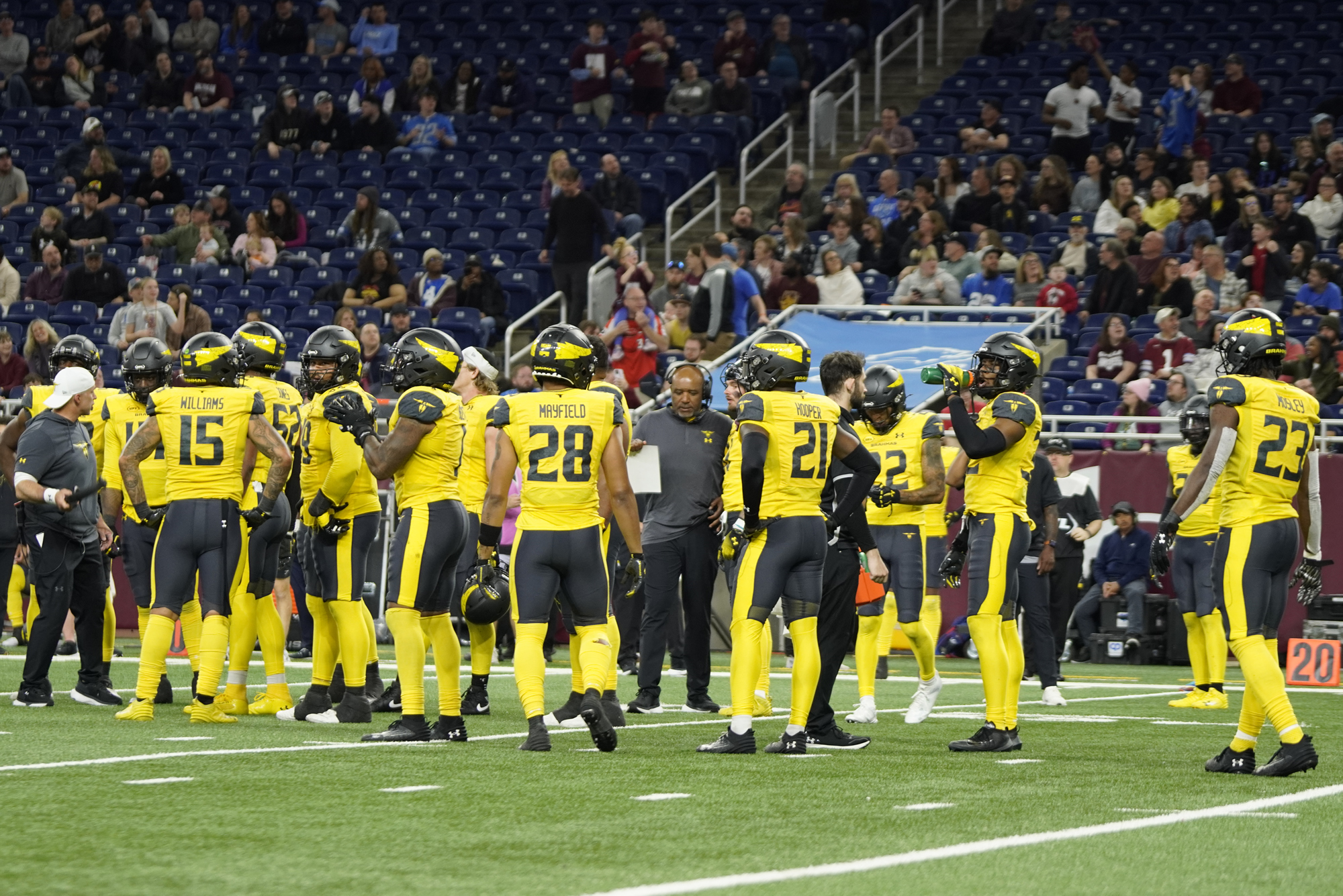
Despite all the offseason hype brought by new part-owner Mike Repole, UFL attendance is trending in the wrong direction in all 5 of their returning markets from last season.
Last offseason saw the UFL relocate three of their 8 franchises, including the San Antonio Brahmas, the Michigan Panthers, and the Memphis Showboats. The UFL’s discarding of nearly half of their markets has seemed to have an effect on fans, emotionally distancing themselves in their other established markets.
Fan Interest in Established Markets at an All-Time Low
DC Defenders: down from 13,282 per game in 2025 to 8,769 in 2026 (–34%)
St. Louis Battlehawks: down from 29,259 to 23,321 (–20%)
Dallas Renegades: down from 9,763 to 6,731 (–31%)
Birmingham Stallions: started strong with an outlier 18,340, but has since collapsed to 8,120 and then 4,705 in recent home games
Houston Gamblers: remains stuck near the bottom at 5,550 (virtually unchanged from last year’s dismal 5,712)
What’s more concerning is the quick reduction in attendance numbers we have been seeing. The Birmingham Stallions had 18,340 in their home opener, 8,120 at their next home game, and a measly 4,705 fans at their last home game.
Last year, the DC Defenders were never below 12,000 at a home game. This year, despite being the defending champs, they have only had over 12,000 at their home opener, with 12,167. The other 3 home games have been below 8,000. Outside of this season, the only other time the DC Defenders have had less than 12,000 in attendance for a home game in their 5 seasons was when they had 11,521 in attendance in week 4 of the 2023 XFL season.
The St. Louis Battlehawks are the best fan base in the league, and their fan base has struggled this season as well, despite having a 5-2 record. The Battlehawks had over 30,000 fans at every home game over the 2023 and 2024 seasons before some dips in 2025, possibly due to a passing game that left a lot to be desired, but still had an average of 27,589 per game. This season, St. Louis opened with 31,191 fans, dropped to 20,209 in their 2nd home game, and 18,563 this past weekend. Outside of this season, the only other time St. Louis had less than 26 thousand people in attendance for a home game over their 5 seasons is never.
The real problem with the UFL is the league’s relentless, self-inflicted wounds. The UFL has spent the last offseason systematically undermining the very things fans need to stay loyal: stability, continuity, trust, and the feeling that their team belongs to their community instead of to a central office.
Here are the four biggest ways the UFL has sabotaged itself — and why each one has directly contributed to the empty seats.
Self-Sabotage #1: Treating Fan Bases Like Disposable Campsites
Three franchises were relocated this offseason. Michigan, San Antonio, and Memphis fans watched the league uproot everything they had built. The #SaveTheStallions campaign was a launched in response the the league alluding that not even the back to back to back champions in the Birmingham Stallions were safe from relocation and wanted to move the Stallions as well. The team stayed after Mike Repole publicly pleaded for fans to buy season tickets and deposits to keep Birmingham alive, and supporters responded. The league then rewarded that loyalty by redrafting the entire roster anyway, and Head Coach Skip Holtz left due to all the league's restructuring.
Fan bases are not pop-up campsites you can fold up and move when it suits the front office. When the UFL treats them that way, fans respond in kind by staying home. Loyalty is not a one-way street. The league signalled last offseason that it has no loyalty to the people who show up, spend money, and build local identity, and the other 5 remaining markets picked up on that. The result is visible in the attendance tables: even the surviving markets are hemorrhaging supporters.
The Michigan Panthers being gone after being in the championship game last year and having the 2nd best attendance hurt league credibility. The momentum of being a defending champion isn’t as strong when the team the DC Defenders defeated for the championship doesn’t even exist anymore.
Self-Sabotage #2: The Second Full Roster Redraft in Three Seasons, And the Broken Promise That Came With It
After the USFL-XFL merger in 2024, the UFL scrapped eight of its sixteen teams, and a complete roster redraft followed. The following offseason saw continuity ahead of the 2025 season, as it was the only time in modern spring football that no teams were sacrificed.
This past offseason, amid all the restructuring and relocations, the UFL stated: "As the league finalizes the reorganization of its football operations, all team rosters will remain unchanged."
That promise lasted about a month.
In December 2025, the league announced it was blowing up every roster again — the second full reset in three seasons. Coaches were allowed to protect roughly ten players within a 200-mile geographic radius. Everyone else became a trading card. J’Mar Smith, a four-year Stallions staple and back-to-back-to-back champion, learned he would not be retained by the team he had helped make historic.
Fans are not stupid. When you beg them to invest emotionally and financially, then scatter their heroes like confetti, you destroy any reason to care year-over-year. The constant restart button tells supporters the league itself does not value continuity — so why should they? The attendance collapse in returning markets like Birmingham, DC, and Dallas is the direct result.
Self-Sabotage #3: Centralized Roster Control, Veteran Blacklisting, and the “Four-to-Five-Year Rule”
The league fired all eight general managers and centralized every roster decision under one office. Mike Repole publicly stated the UFL is “not a place for players who linger around for four or five years.”
The results were predictable and public. Two-time champion running back Ricky Person Jr. and fan-favorite linebacker Frank “The Tank” Ginda both publicly stated they are being blacklisted. Ginda also stated this was despite multiple teams and coaches begging to sign him. Other veterans who built dynasties watched their legacies erased. The message to every player and every fan was crystal clear: loyalty to the UFL is a one-way street.
Veterans sell tickets. create storylines, become local heroes. By treating them as liabilities instead of assets, the league removed the very people who gave fans a reason to return season after season. The human cost is obvious, and the business cost is showing up in the attendance figures.
Putting restrictions on football operations beyond fielding the best football team possible in favor of pushing more young players and manufactured roster churn is counterintuitive. The best development environment for young players is against the best possible competition.
Self-Sabotage #4: The Luis Perez Trade, When the League Stopped Feeling Like a Serious Professional League
A major blow to the league’s credibility came when the league’s central office traded the “The King of Spring,” Luis Perez, from the Dallas Renegades to the St. Louis Battlehawks for a backup tackle.
That single transaction amplified the rising problems for fans who were not paying close attention. The UFL no longer feels like a serious professional league with its own identity, heroes, and rivalries. It now feels like the Mike Repole Football League, a developmental pipeline striving to become NCAA Graduate FB or NFL pre-preseason.
I cautioned in November in “UFL's Shift From Pro League to NFL Temp Agency is Recipe for Fan Disengagement” that in this centralized system with the absence of GMs meant there could be no true player trades. That it transitions away from pro sports towards a controlled simulation where parity is enforced, breeding bland, interchangeable rosters.
When the league trades away its biggest star for spare parts, it tells fans the product exists mainly to feed the NFL, not to stand on its own. Luis Perez never should have been a QB2, but to have him be traded to improve a team without that team receiving even remote market value is not how a serious league operates.
The Damage Was Avoidable
Each of these decisions probably felt like a smart internal move to ownership: cut costs, enforce parity, speed up NFL development, “fresh start” marketing. Together, they created a perfect storm of instability. Fans do not reject spring football, they reject a league that keeps proving it will abandon them the moment it becomes convenient.
The on-field product can still be exciting. Mike Repole has pushed marketing and community involvement harder than expected. But no amount of promotion can overcome self-sabotage this severe. Marketing “local ties” while treating fan bases like temporary campsites is counterintuitive.
Mike Repole has been a passionate and involved owner, which is valuable in itself, but his over-involvement in restructuring everything relating to football operations has been damaging. So far, his ownership of the UFL feels like the classic Tommy Boy scenes where Chris Farley’s character gets so excited about the product that he accidentally “kills the sale” by loving it too much and doing far too much.
The Path Forward Is Still Available
The solution is the same one I outlined six months ago and it’s real simple:
Restore real team autonomy with GMs or dedicated personnel directors.
Stop treating four-to-five-year guys as liabilities, end the blacklisting.
End the engineered redrafts and manufactured roster churn; let on-field competition determine rosters.
Embrace the stars and storylines fans actually care about instead of forcing artificial turnover.
Ditch territorial gimmicks for genuine marketing, leverage full-time coaches for community outreach as Repole advocates, but without meddling in football operations.
The UFL still has many pockets of passionate fans, and professional spring football sells itself, provided fans believe it’s going to stick around.
To Mike Repole and UFL leadership: the fans have now spoken with their wallets and their empty seats. The players have spoken publicly. The attendance numbers — especially in the returning markets — are undeniable.
It’s not too late to change course. Just like Tommy in Tommy Boy, who started by accidentally killing every sale with too much love but ultimately saved his family’s company by learning to listen, trust the process, and let the product sell itself, Mike Repole can still turn this around. The league of opportunity can still thrive, but only if it stops sabotaging the very loyalty it needs to exist.